Fighting Homelessness In Austin With Tiny Houses
"Through the built environment, not just housing, we're able to start the process of creating a village that's a true home for our neighbors. This means creating spaces for neighbors to engage and build relationships amongst each other, staff and volunteers.”
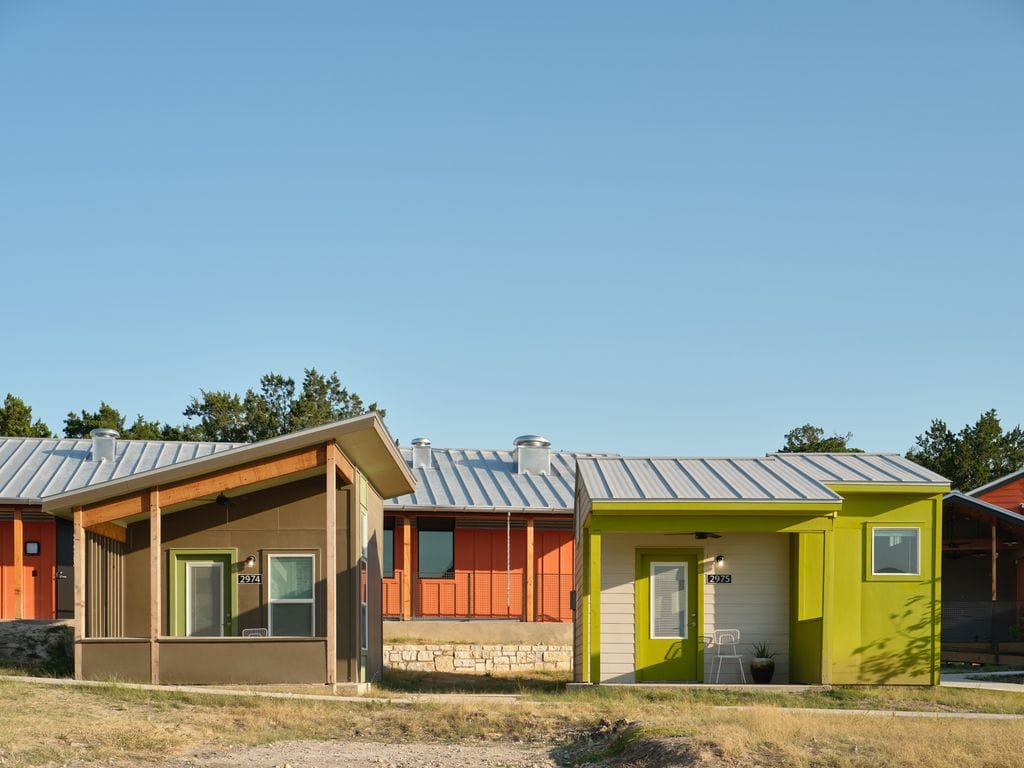
Since 2015, Austin has been home to a remarkable experiment in ending homelessness in Texas. The Community First! Village uses microhomes to help people transition out of chronic homelessness. It’s been a wild success, inspiring similar projects in Midland and Little Rock, Arkansas.
Part of that success is an extremely basic, yet often missing, empathy and respect for homeless people as, you know, people. The capital city has been a major front in Governor Greg Abbott’s vocal campaign against encampments, which has been overseen by the Texas Department of Public Safety.
Mobile Loaves & Fishes, the driving force behind Community First! Village, takes a different approach to housing people than the dormitory-style shelters that are most common. They began in 2004 by using RVs to create makeshift communities for people, which eventually grew into the Community First! Village. It’s the sense of belonging that helps the most after the physical act of sheltering people.
“We believe the number one cause for homelessness is a catastrophic loss of family,” said Sarah Satterlee, Senior Director of Site Operations. “It's the loss of those familial relationships that cause many of our friends to experience chronic homelessness. Through the built environment, not just housing, we're able to start the process of creating a village that's a true home for our neighbors. This means creating spaces for neighbors to engage and build relationships amongst each other, staff and volunteers.”
Community First! Village was a significant step up. It’s simply a neighborhood, albeit a slightly strange one. Capitalizing on the tiny or microhome craze, Mobile Loaves & Fishes built a housing development of 200 – 400 square foot houses off Hog Eye Road and has been steadily expanding since 2021.
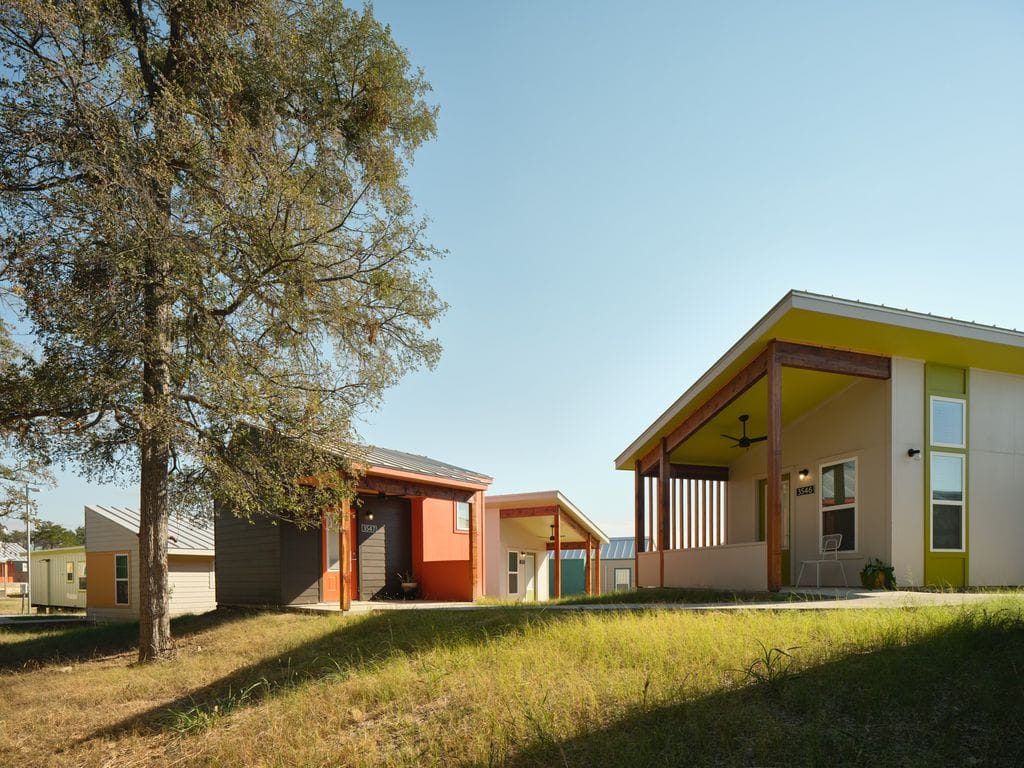
The tiny homes are a major part of the success, offering homeless people a space of their own. According to Satterlee, using such homes allows for very efficient movement of people from homelessness to a housed status. They offer space for individuals, while allowing dense communities to spring up.
“Tiny homes also create the unique opportunity for us to have shared facilities and community spaces, inviting neighbors to interact with each other and their environment rather than remaining in isolation,” she said. “The density of the village also creates more opportunities for informal interactions amongst our neighbors, staff and visitors.”
The latest expansion has houses designed by Mark Odom Studio, a Cline company out of Austin known for their innovative approaches to homes. Until Odom and his team came on board, the homes in Community First! Village were a wide mish-mash of the dozens of styles that have sprang up since tiny homes became fashionable. This led to endless variety for the residents, but a poor sense of cohesion.
Odom and team were selected after submitting several plans. Their houses come in six varieties split into two broad philosophies: introvert and extrovert. Extrovert houses have more space dedicated to porches so that residents can sit outside and commune with their neighbors, as well as having lower windows. The introvert models have higher windows for more privacy, allowing residents who may get overstimulated more safe space. In the “collector” model, some of the precious space is dedicated to additional shelving for personal items that let introverts enjoy having things displayed.
“Listen and empower the people who are experiencing chronic homelessness, make them feel that it is their community,” said Odom in an emailed interview. “Shelter should bring a feeling of safety while giving them the freedom to alter the shelter as it fits their personality and lifestyle.”
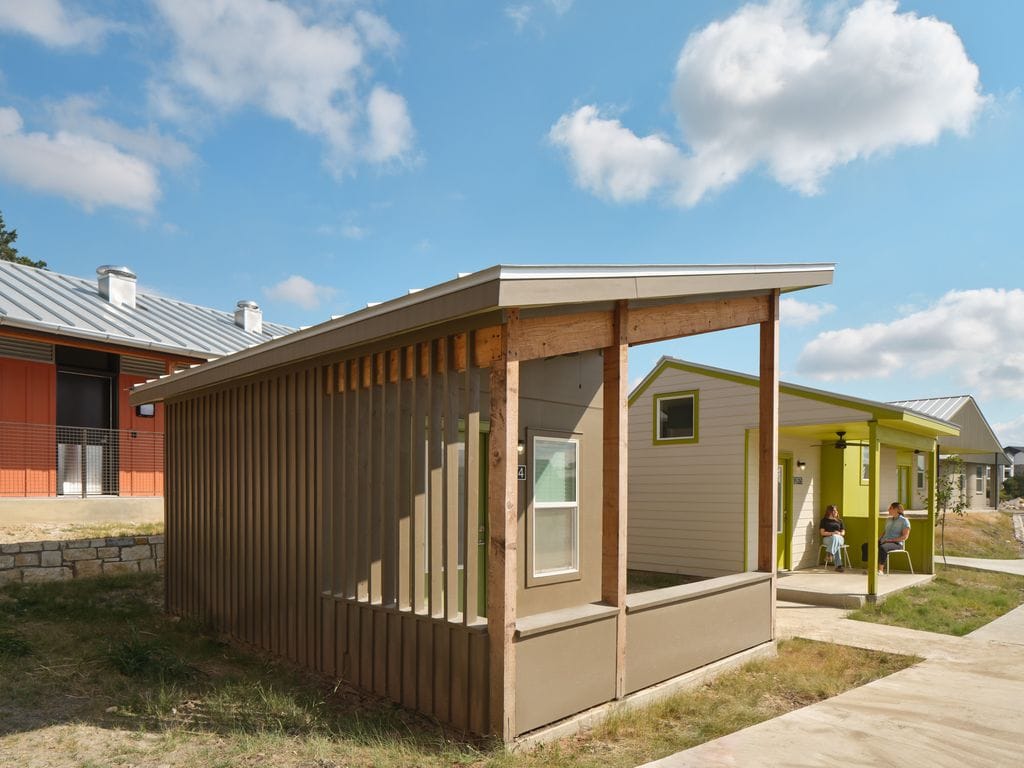
Throughout the project, including the recent expansion, there is a premium placed on listening to the needs of the homeless instead of simply dictating where and how they should live. For instance, Odom designed the units to be durable and secure so they can be pet friendly, as many homeless people are forced to leave their pets behind in typical sheltering situations.
The biggest contribution remains the sense of belonging. Homelessness can be very isolating. Allowing residents of Community First! Village to form bonds strengthens the individuals so that they can hopefully transition fully back into society. Simply creating a place that welcomes the homeless as full neighbors does a lot of good, and it shines through in every aspect of the design.
“I believe that understanding the social perspective of personalities per user gave us a unique perspective through concept during the design process,” said Odom.

Comments ()