Houston Museum Opens Office of Indigenous Community Relations
The Houston Museum of Natural Science created the Office of Indigenous Community Relations as a liaison between tribes, nations, and activist groups
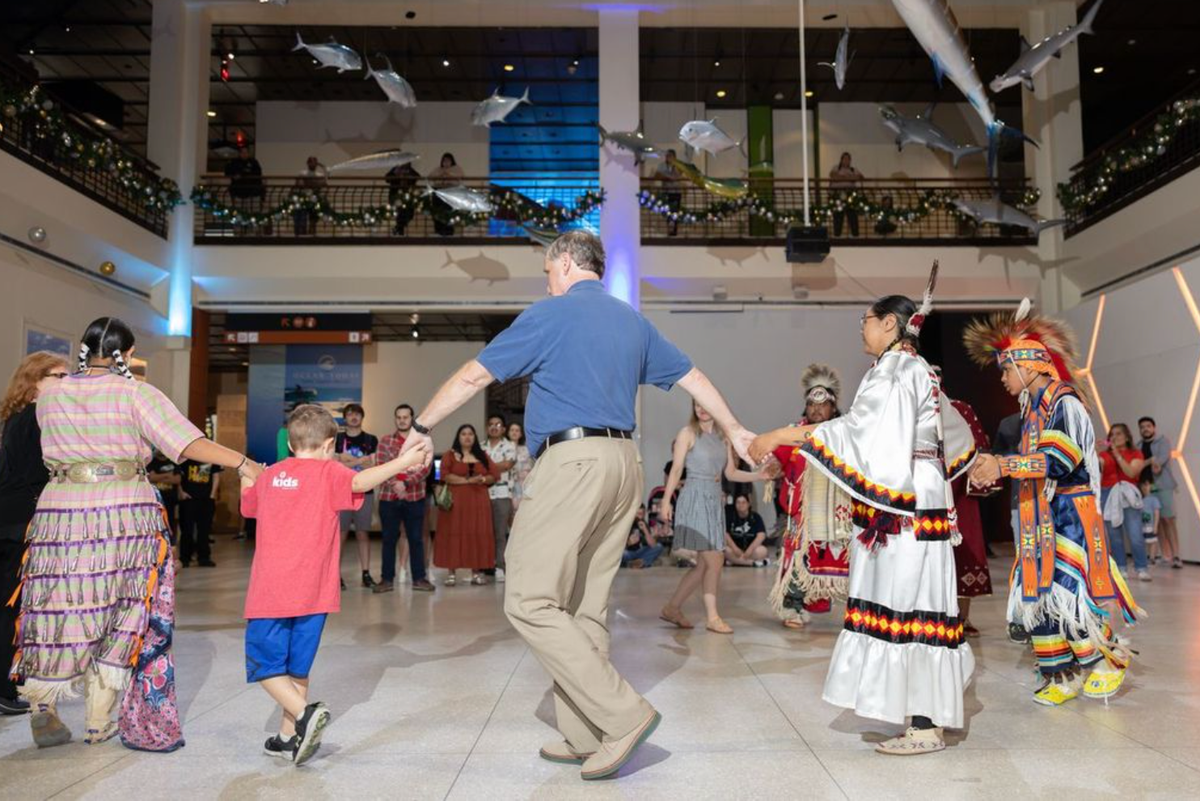
The John P. McGovern Hall of the Americas at the Houston Museum of Natural Science (HMNS) is a first-rate exhibit that showcases the arts and culture of Indigenous and Native Americas from the frozen wastes of Alaska down through the Amazon rain forest. You’d expect that excellence in a place like Texas, a state literally named after a Caddo word for “friend.”
However, there is always a reason to be wary even in the best exhibits of such culture curated and displayed by people of non-Indigenous and Native heritage. Well-meaning initiatives centered on education and celebration may be insensitive or offensive without the proper cultural context.
To that end, the HMNS recently created the Office of Indigenous Community Relations as a liaison between tribes, nations, and activist groups in order to better present their collection in accordance with Indigenous and Native American wishes. Gabriela Truly, formerly the Head of Collections, is stepping into the role, and has already seen a positive response from tribes.
“They’re very excited that the museum has made this decision and allocated again their resources to support this initiative and to support the work that we have already been doing for several years,” she said in a phone interview.
Truly says that such offices in American museums are fairly rare. Though the museum has a long history collaborating with tribes, there is still more to learn. According to Truly, the office will help the museum avoid sweeping generalizations about Indigenous and Native American cultures, and it will put the voices of those cultures front and center.
Curating the Hall of Americas is different from the rest of the museum’s collection. Dinosaur fossils don’t need an advocate because the ancestors of those displayed are extinct or birds. By contrast, almost all the groups chronicled in the Hall of Americas are still living. Addressing the concerns of Indigenous and Native American people as a present-tense conversation and not the study of the ancient past is one goal of the office, as is not talking over them.
“That has been one of the big lessons,” says Truly. “Staying silent and quiet so that we can listen and use the information where it needs to be used versus trying to do more sweeping, generalized assumptions. With our Indigenous partners, we’ve learned that it takes a little bit longer so that we can be very aware, very deliberate in what that end message is so that it is their message.”
Another aspect of the office is complying with the latest regulations from the Department of the Interior. In 2023, the regulations around the Native American Graves Protection and Repatriation Act were revised. Now, museums are required to obtain consent from tribes to display artifacts. The new rules also closed the “culturally unidentifiable” loophole, a sort of get-out-of-jail free card that some museums would use to keep human remains and artifacts in their collections by claiming they could not be conclusively linked to living descendants or active tribes.
All museums collecting Indigenous and Native American artifacts or remains are required by law to have a NAGPRA officer or some appointed representative in charge of following the law. HMNS has gone beyond that with this new office. Recently, they did a large-scale sweep of the Hall of Americans, taking down some sensitive artifacts until they had received the appropriate permission.
“Among the belongings that we saw identified as we walked through the hall were what we would call objects or belongings of highest ceremonial importance,” said Dr. Dr. Dirk Van Tuerenhout, HMN’s Curator of Anthropology and now also the Head of Collections following Truly’s move. “For example, masks that would have been used in ceremonies… they have great meaning. Collectors might not have been aware of those meanings when they acquired them, and then eventually they ended up in museums like ours. But we have the knowledge. We decided preemptively, but also out of respect, specifically, to remove them while still maintaining the question, ‘this is what we have, maybe obtain your permission to display?’”
At this point, the office is still small, just Truly, but HMNS expects it to grow. Their relationship with Indigenous and Native tribes has expanded significantly over the last several years. In 2022, the Hall of Americas re-opened in a grand ceremony that featured dancers and elders, including a blessing from Herbert G. Johnson, now Principal Chief of the Alabama-Coushatta. Even then, before the office was announced, it was clear that HMNS was ready to look to be better about their collection as well as lead the way for other museums.
“For HMNS to take this step for something so concrete versus just having the group of us working on the NAGPRA, I think was a very huge step institutionally and in the museum field,” said Truly. “I cannot speak to how many museums at this point have something like this office. We’ve, again, just been living with this information ourselves for a few weeks. But I know there are not many because we have not heard about them either.”


Comments ()