How Wiess Park Changed Into A Houston Outdoor Art Garden
Thanks to some recent investments from the Houston Parks Board, Wiess Park is now also an open-air sculpture garden for seven Texas artists
Wiess Park is one of the strangest parks in Houston, and it just got a bit more delightfully weird. Thanks to some recent investments from the Houston Parks Board, who has their headquarters there, it’s now also an open-air sculpture garden for seven Texas artists.
The park is a long, thin piece of land nestled between 610-W and Post Oak Boulevard that the city took over in 1941. In practice, it’s more of a miniature arboretum than a traditional park, though the wild part of the land isn’t quite thick enough to dampen the ever-present sound of the afternoon traffic along one of the city’s busiest highways. However, if you pack a set of earbuds and jog or walk the trails on a nice winter day, it’s quite magical.
In early December, the Houston Parks Board unveiled a set of seven sculptures displayed between the walking trails and the sidewalks on Post Oak where drivers could also see them. It’s part of the Parks Board’s commitment to enriching the green community spaces around the city.
“The Art Trail at Wiess Park began with the vision of civic leader and our longtime board member Don Aron,” said Beth White, President & CEO, Houston Parks Board, in an email interview. “He saw an opportunity to bring art into the everyday experience of parkgoers in this neighborhood. As he shared the idea with neighbors, it quickly gained momentum, reflecting how deeply people value this park and the role public art plays in enriching daily life. What you see today is the result of true community collaboration. Houston Parks Board was honored to facilitate the partnership and process between Don Aron and Redbud Art Gallery, as this project was a natural fit for all partners involved.”
The seven artists who contributed works are an eclectic lot. One is Michelle Matthews, a New Jersey-born artist that moved to Houston in 1981. Her sculpture is part of her Houston Monarch Story project. Monarch butterflies pass through Houston on their yearly migration. But a combination of habitat loss, pesticides, and climate change means the species is officially listed as endangered.
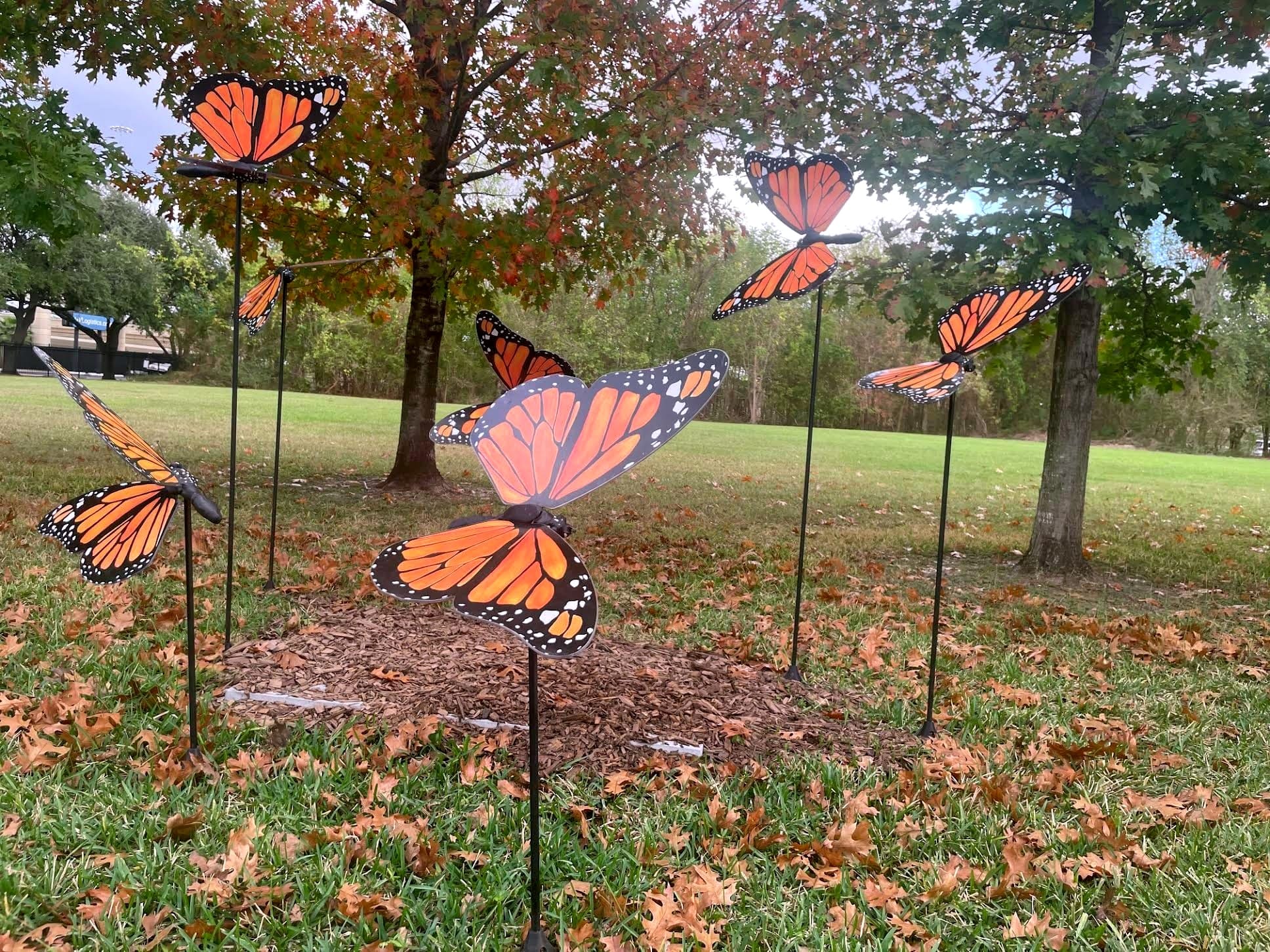
Matthews began installing her butterfly sculptures along Buffalo Bayou in 2024 and has been steadily expanding to other venues like Wiess Park. The eye-catching giant butterflies have a QR code near them that can be used to find out more about Monarchs and how people can help the species.
“The Monarch butterfly is a marvel of nature that flutters through our backyards every spring and fall,” said Matthews in an email interview. “Their bodies are the width of a pencil, with paper-thin wings that span about 4 inches. Responding to cues from nature, they make a 6,000-mile round-trip journey from Mexico to Canada. On the journey north, the Monarchs search for native milkweed, its host plant, the sole food source for its caterpillars, and the only plant where it will lay its eggs to produce the next generation that will continue the journey north. As the days become shorter and food sources disappear, the milkweed and pollinator plants go dormant, and the Monarch knows it is time to head back to Mexico. On the return journey, the Monarchs are in diapause. The same butterfly that arrived in Canada will make the trip south, fattening up for the 3,000-mile journey, feasting on nectar-rich plants as it goes. Once it reaches Mexico in late November, the Monarchs roost in Oyamel fir forests until nature cues it is time to fly south. This is just one fact that intrigues me about the Monarch. Art is my way of spreading awareness about the Monarch butterfly.”
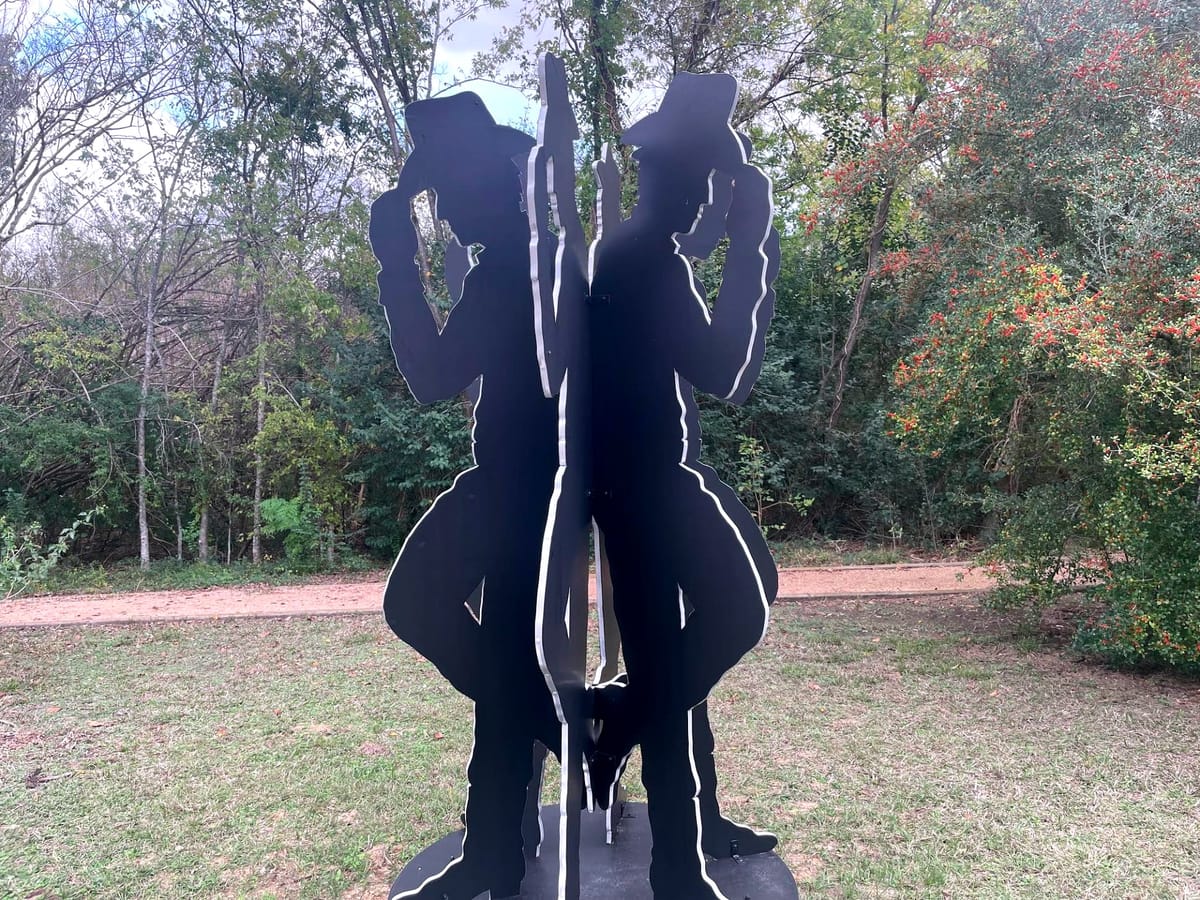
Paul Kittelson’s contribution is less ecological, but no less striking. Cowboy Shiva mixes the multi-faceted portrayals of Buddhist and Hindu deities with classic cowboy iconography, giving the statue a kind of down-home extra-dimensionality.
Kittelson is one of the city’s most prolific public artists. His statues and creations can be found all over Houston, even adorning the freeways. Born in Minnesota before heading to Houston to complete his MBA in 1985, Kittelson has wandered across the nation absorbing the various symbols and imagery. The cowboy is one of his favorites.
“I’ve spent most of my life in the west, traveling between California, Houston and the Black Hills of South Dakota,” he said in an email interview. “The cowboy cutout is as much a part of the western landscape as Dairy Queens and bales of hay. Americans love cowboy mythology and everything it represents. Like most myths the image of the cowboy is not all it seems. In fact, it is as much of an illusion as the silhouette itself.”
Wandering through the trails, the easiest statue to miss is that of Tim Glover. This is not an accident. Liberty Tree is a strange mix of the industrial and the natural, a perfect piece for something that is supposed to be both part of the tree-strewn park and one of the priciest neighborhoods in Houston. In some ways, it serves as a barrier marker.
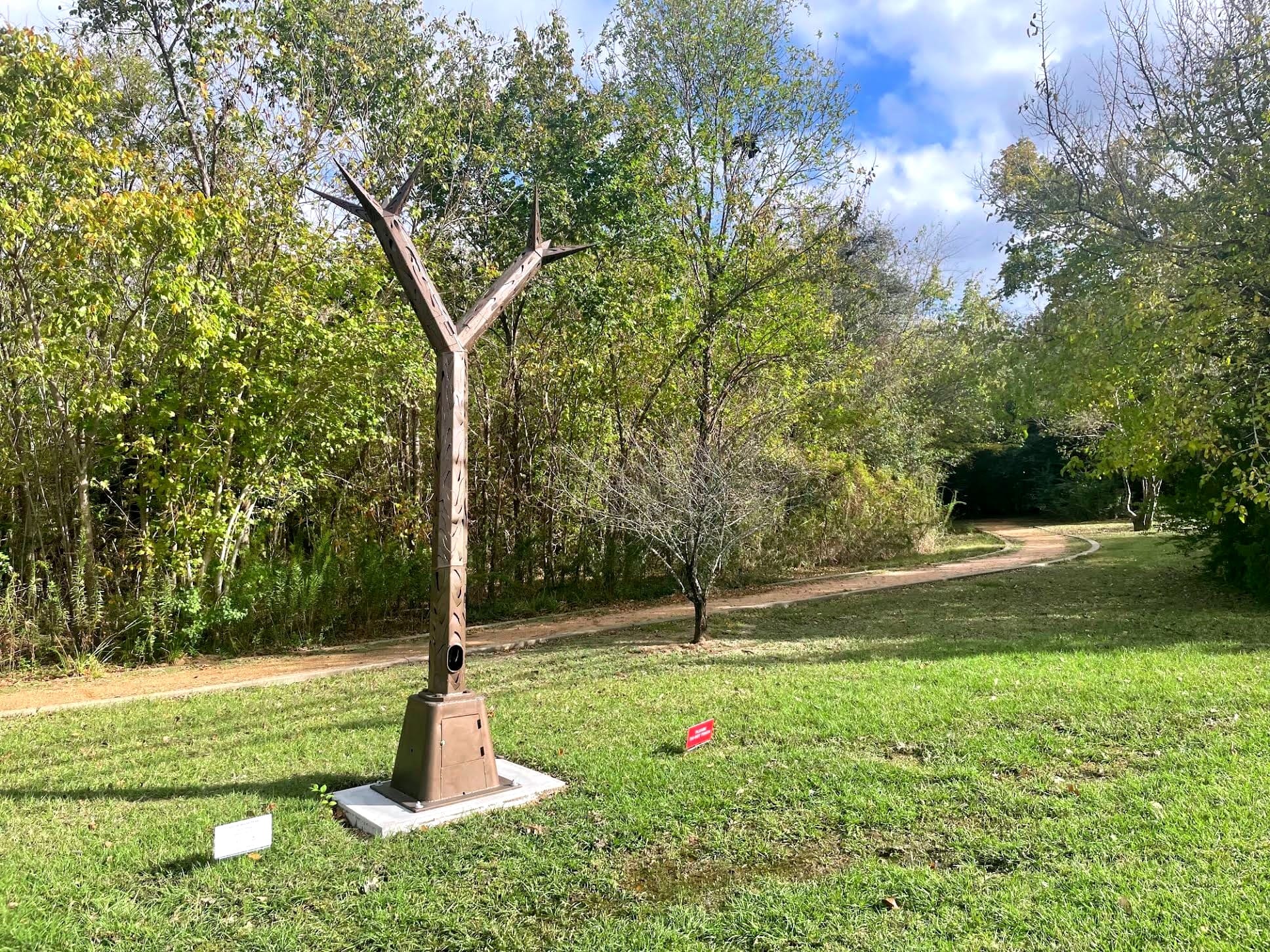
Made from a reclaimed telephone pole, Liberty Tree looks like a small, denuded tree at first glance. It’s only when you get close that the industrial lines get clearer. Is it a mechanical mind’s mockery of the world we paved over, or a tribute to trees from the orphaned inheritors of the natural space? Hard to tell, but it fits right in at Wiess Park, sparking conversations about the need for green spaces and the role of art in them.
“I am fascinated with found objects, especially industrial surplus which is abundant in Houston,” Glover said in an emailed interview. “I find all kinds of associations in these treasures. They also ground my sculpture to the region where they are created. I have had the privilege of contributing my artwork to many community projects in Houston over the years. Although each project has been different in design and scope, they all used art as a way to engage the community in a sense of place, pride and togetherness. Public art can provide an uplifting experience in an outdoor setting.”

Comments ()