
Public Hearings On Immigration Enforcement In Texas
Over the span of several hours, The People’s Hearing in Dallas included panels dedicated to the immigration enforcement pipeline, racial profiling, and DACA
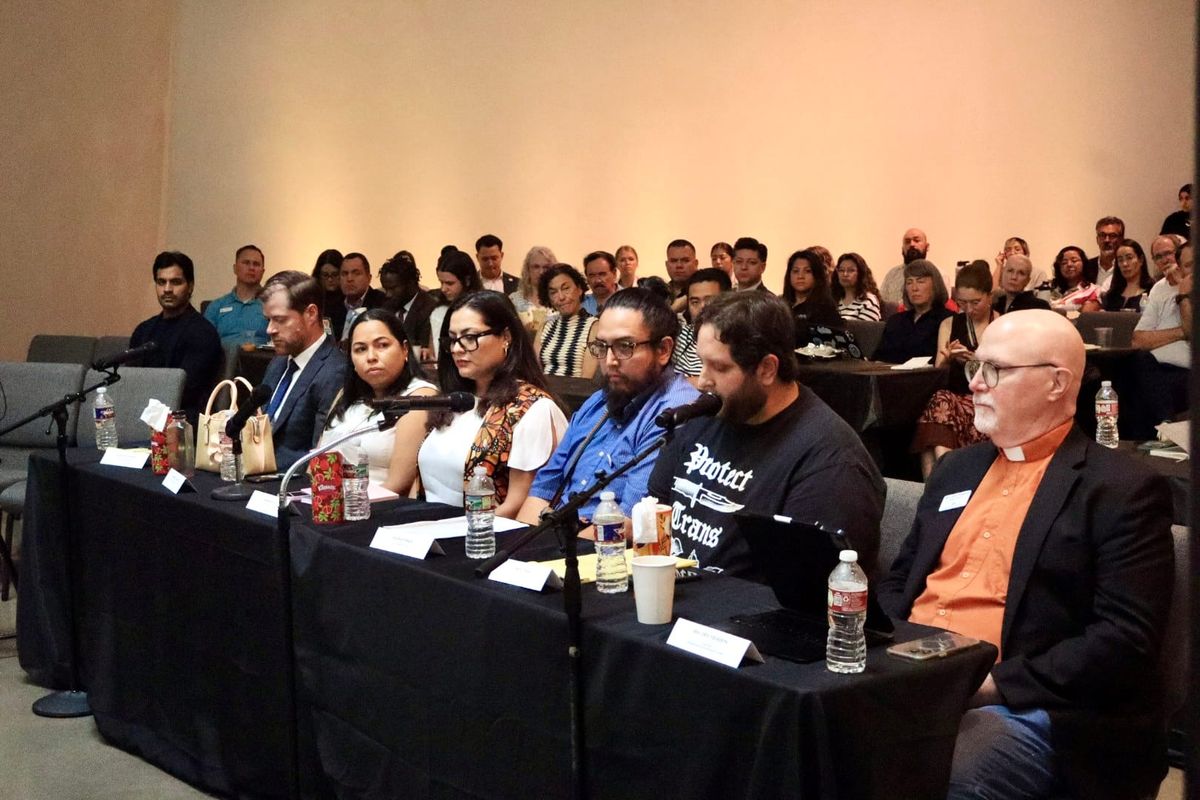
Throughout the week, San Antonio and Dallas hosted public forums that often included emotional accounts about immigration encounters in Texas. “The People’s Hearings” were not official hearings but organized by organizations like the Texas Civil Rights Project, the Hispanic Federation, and Latino Victory to document the stories of ICE and immigration enforcement.
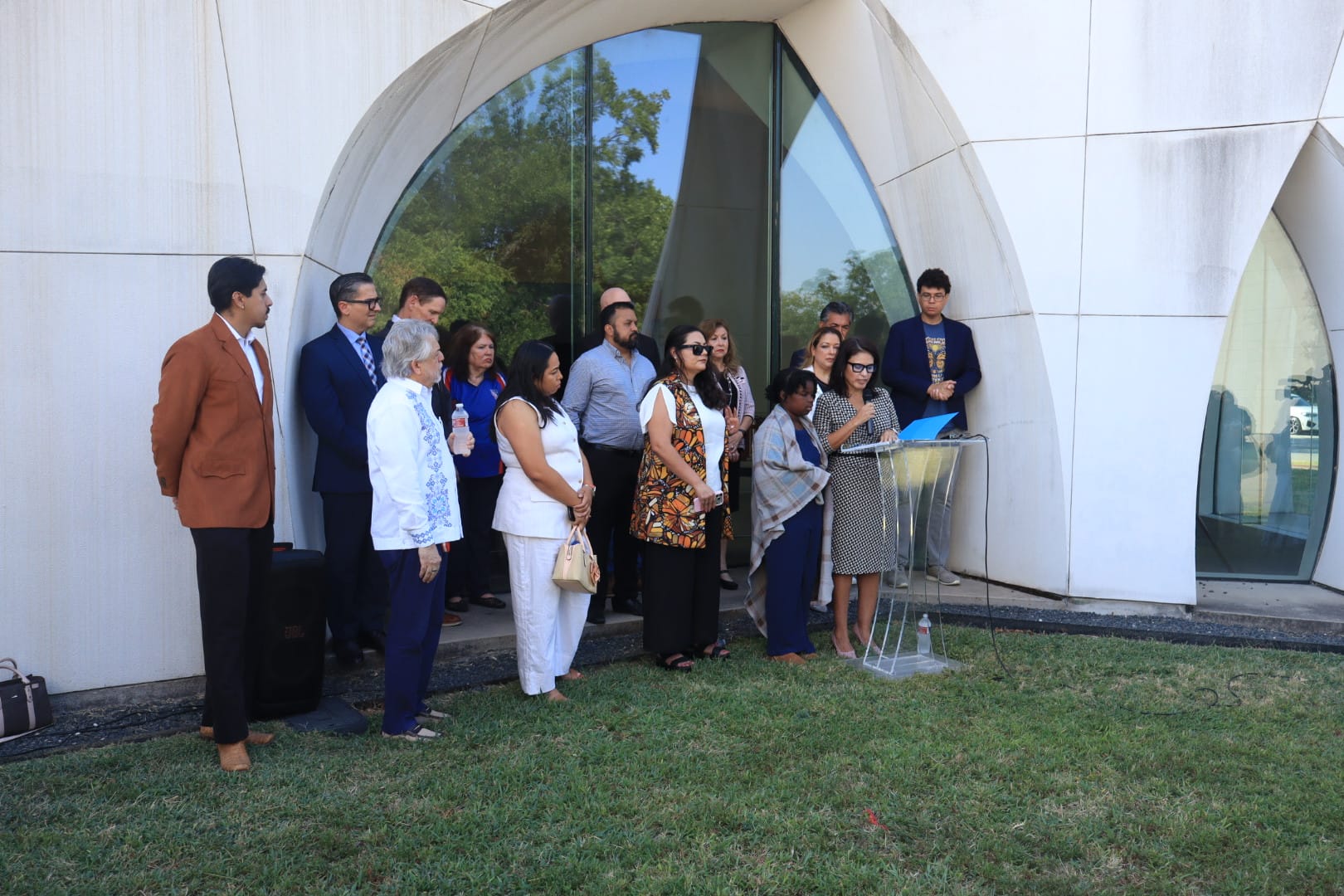
Rochelle Garza, the president of the Texas Civil Rights Project and the Chair of the US Commission on Civil Rights, opened both hearings in San Antonio and Dallas. At a press conference before the Dallas hearing, Garza reflected on the testimony she has witnessed in other cities like St. Paul. She mentioned hearing from small business owners who were taken and beaten by ICE despite being citizens. And protesters who were now scared to exercise their First Amendment right. “What we’re seeing now is about instilling fear,” she said.
Texas State Rep. Ana Maria Ramos appeared at the press conference as well. She was standing alongside a young girl draped in a blanket. Ramos said the child was one of 145,000 in this country that has been separated from her parents due to immigration enforcement.
Over the span of several hours, The People’s Hearing in Dallas included panels dedicated to the immigration enforcement pipeline, racial profiling, and DACA. Danny Woodward, an attorney with the Texas Civil Rights Project, spoke about how Texas has become the epicenter of immigration enforcement. He said that over a quarter of immigration arrests are happening in Texas, through both ICE warrants and 287(g) agreements.
The state of Texas has required most counties to adopt 287(g) agreements, which deputizes local law enforcement into immigration enforcement, through Senate Bill 8 which went into effect in January 2026. According to Woodward that has turned local law enforcement into de facto ICE agents.
While the hearing was public, several witnesses spoke behind a black curtain to shield their identity. One of those individuals introduced himself as “Jason.” A US citizen, Jason is also a father and husband. His wife, who has MS, was detained in Dallas after an ICE check-in in February and is now at Bluebonnet Detention Facility over three hours away. Jason said his wife has not received adequate care for her condition, and he has been unable to push for necessary medical interventions. She has seen her daughter twice. The last visit was so traumatic, Jason said she begged him to not bring their child to Bluebonnet again.
Since his wife’s detainment, Jason has thrown himself into trying to comprehend the immigration system of the United States. “No American family should have to learn an entire legal system simply to keep their family together,” said Jason.
A panel on DACA then focused on impacts in Texas, which has the second largest population of recipients in the nation. Juan Carlos Cerda of the American Business Immigration Coalition noted that there are currently over 80,000 DACA recipients in Texas and losing their potential revenue from taxes would cost the state $8.2 billion. Cerda cautioned the crowd to recognize that even DACA recipients are not safe from deportation, particularly as renewals have slowed down significantly. According to him, renewals are now taking upwards of six months.
A subsequent panel shed a light on the end of the Texas Dream Act, which was passed in 2001 and allowed undocumented students to attend college at in-state tuition levels. Oscar Silva, who was born in Mexico but lived in Texas since he was a child, found his master’s degree jeopardized in its last year when the Texas Dream Act ended in 2025.
While Silva was able to complete his master’s degree, he currently feels like he’s “stuck in limbo.” He said it was particularly painful to watch his classmates celebrate passing the CPA exam, which he is locked out of testing for. Silva plans to continue making a living through tutoring. He was potentially looking at enrolling in a PhD program. But because of the end of the Texas Dream Act, that’s likely not financially viable.
During the closing remarks of the hearing, Marty Castro, the former chair of the US Commission on Civil Rights, called Texas “the research and development lab” for new, and even cruel, immigration policies. He also mentioned the testimony heard would be compiled in a large report, albeit not one affiliated with the US Commission on Civil Rights. “Us being here is of extreme importance to share what could happen if we don’t take a stand,” said Castro.


Comments ()