
A Museum’s Quest To Humanize The Incarceration Experience
Amid the morbid and the macabre is a bold attempt to explain the life and impact of incarceration on the humans who serve time and the people who guard them.
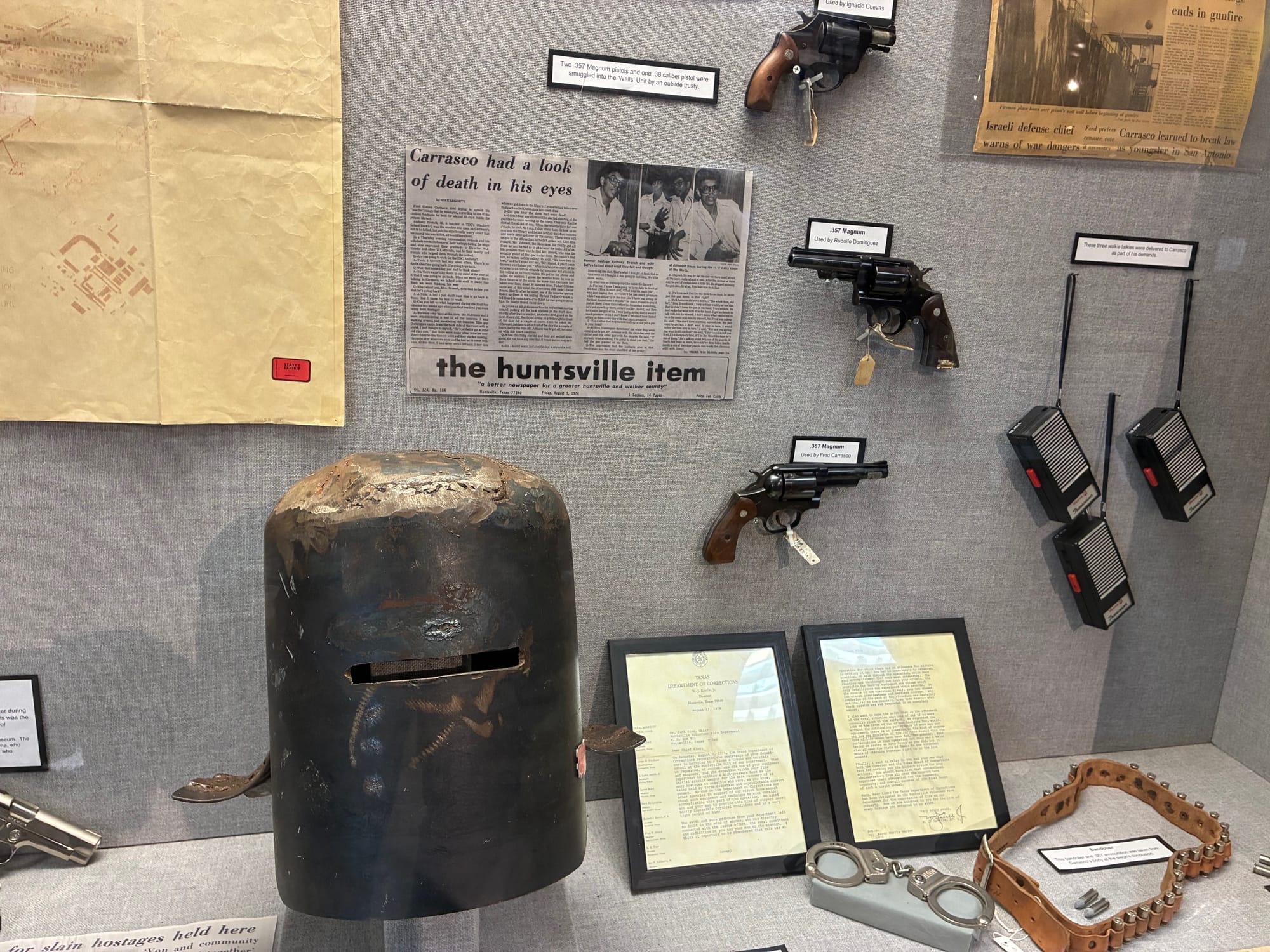
There is an undeniable air of the freak show when you first enter the Texas Prison Museum in Huntsville, located just a few miles from The Walls, the state’s oldest penitentiary. The building smells overwhelmingly of high-quality handmade leather goods, which sit in the gift shop next to the sparkling belt buckles you find in larger tourist stops across Texas. The star attraction in the museum is an actual electric chair that was used to execute prisoners, but there are plenty of other pieces of lurid loot, including murder weapons, shackles, and grim-looking homemade armor used during prison riots. It’s like a true crime podcast come to life.
However, that is less than half of the story told in the museum’s collection. Amid the morbid and the macabre is a bold attempt to explain the life and impact of incarceration on the humans who serve time and the people who guard them. From incredible art made by prisoners to deeply nuanced looks at the emotional impact of execution on convict’s families, the Texas Prison Museum wants people to come away understanding the human aspect of the prison industry, even if they initially just come to be close to some gore.
The director of the museum is David Stacks, a big man with a soft voice and Zen-like demeanor. A former corrections officer and deputy director of the Texas Department of Criminal Justice (TDCJ), Stacks has the slow, calm voice of a man who learned the importance of boundaries and de-escalation the hard way. He knows that visitors to the museum come in with their own sets of biases, but he makes sure that the collection is presented in a way to ensure education, not just validation.
“We have, of course, a lot of people with pretty opinionated points of view on various crimes, particularly the death penalty,” he said in an interview. “We don’t take a stance on the death penalty. It’s not our position to convince somebody to be for it or against it. Our position is just to make sure people have the facts, and then they can decide what side of the track they want to be on."
Rather than let Texas prisoners become caricatures of depravity worthy only of scorn, the museum highlights the individuality of spirit of the people who have matriculated through the Texas correction system.
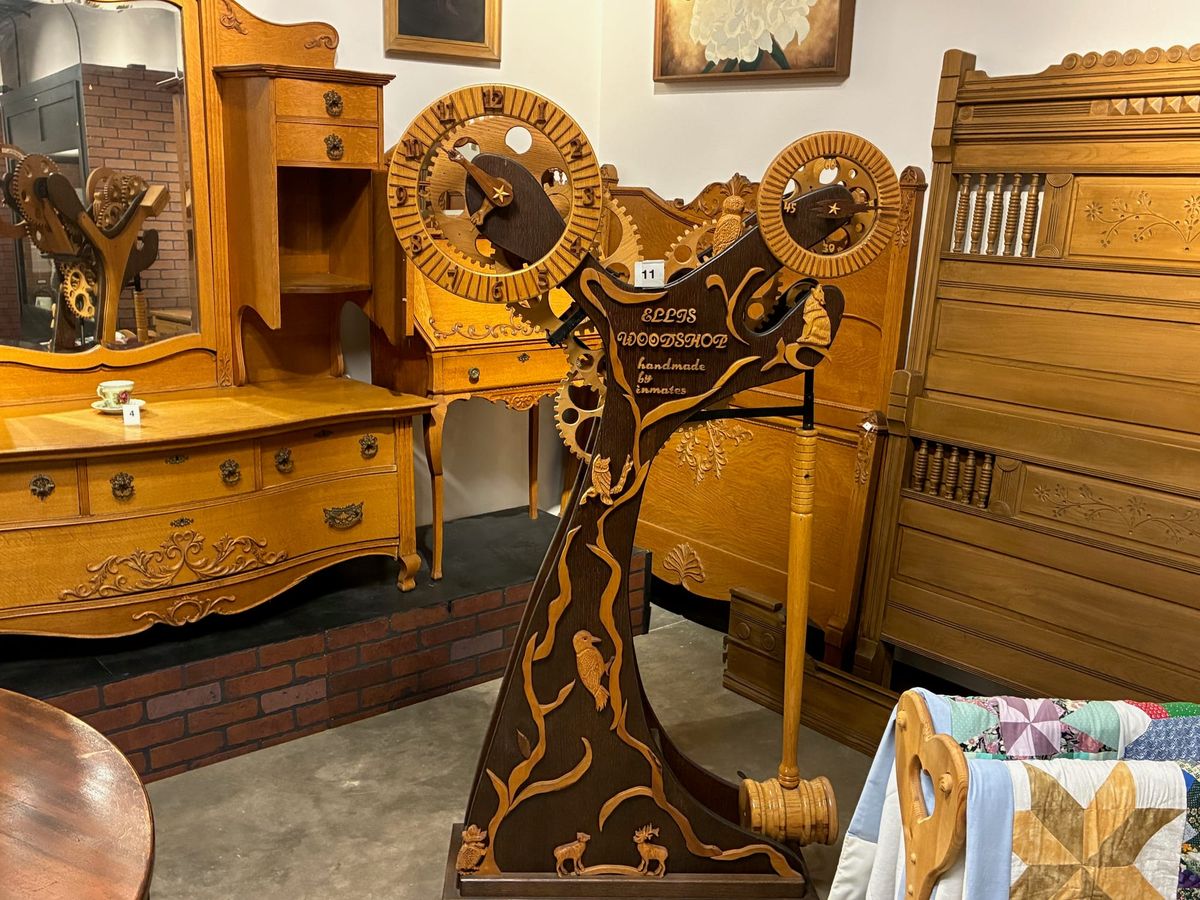
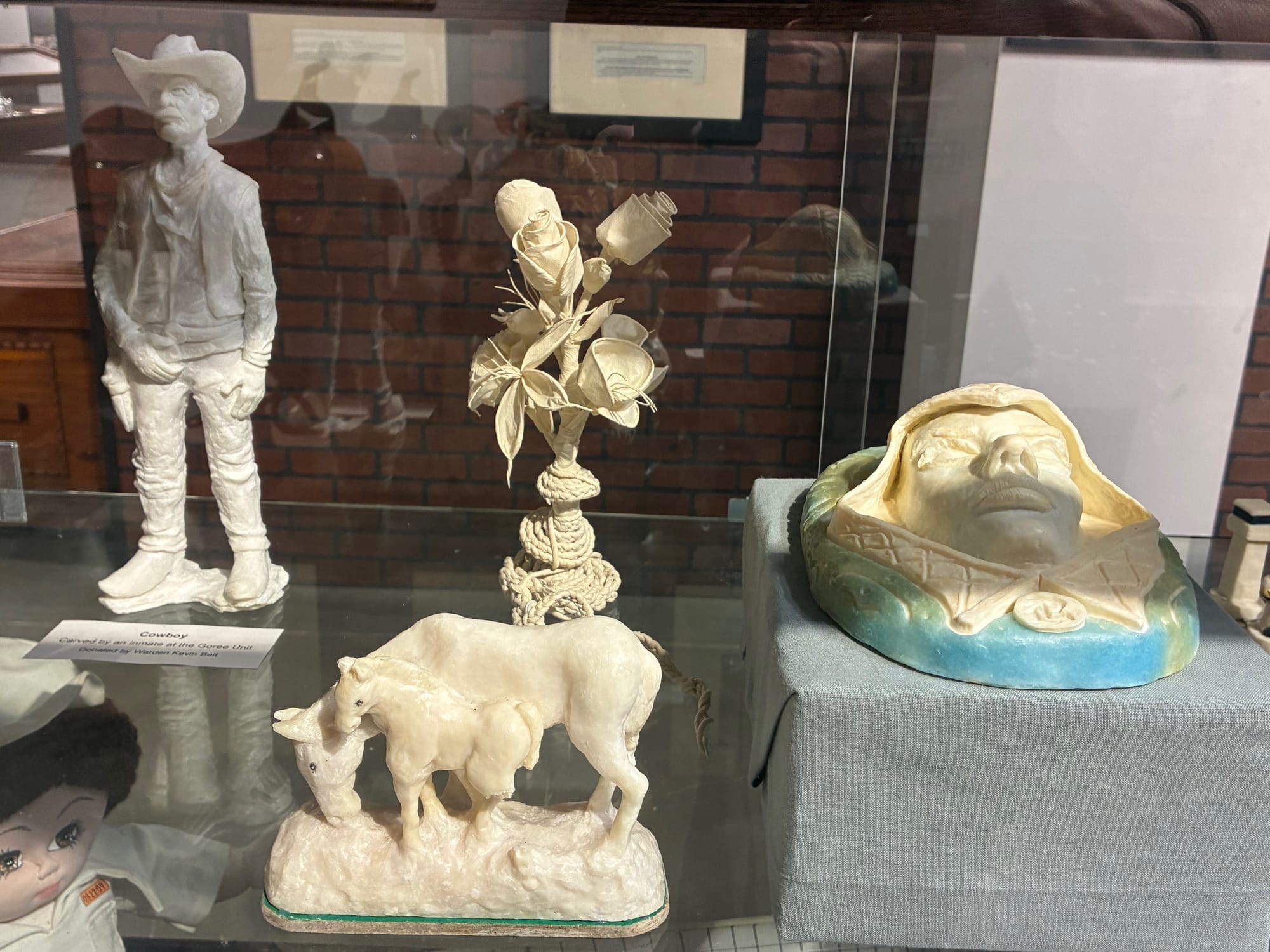
For instance, the museum is probably the state’s strangest and most eclectic art gallery. Every spare wall is covered with a variety of paintings done by inmates, donated either by the prisoners themselves or from prison employees who received them as gifts. Nearly every artistic discipline you can name is on display, from massive wooden clocks to soap carvings that look like fine marble to dolls. Just off the entrance is bizarre but beautiful sculpture made by an inmate who asked for the stump of a black walnut tree to “piddle on,” and who spent several years painstakingly carving animal faces all around its surface. Most of these works have no documentation, but they illustrate a massive wealth of artistic talent housed behind Texas prison bars. There is every bit as much heart in the museum’s art collection as there is in any standard gallery.
“I mean, for anybody to think that a prisoner is less than a human being, they need to rethink that,” said Stacks. “They come from all walks of life. They’ve made bad decisions. Now, whether it’s intentional or were they out of their mind because they were doing something, some chemical they weren’t supposed to, didn’t have a right clarity of mind? I don’t know. But the fact is, they’re still human, and we have to treat them as human beings. To do less is not civilized, in my opinion.”
Of course, not all craft is wholesome. Stacks particularly admires a trio of wooden carved guns that were so realistic they fooled guards during an escape attempt. Most visitors don’t even notice they aren’t actual pistols according to Stacks.
Obviously human cruelty is on display. Just because someone can paint a beautiful picture doesn’t mean they can’t also be a rapist or a murderer. The museum presents all sides of this. One moving exhibit juxtaposes the crimes of death row innates with statements made by their surviving loved ones. Even in brutality, there is still some tragedy, and the Texas Prison Museum never misses a chance to point it out.
In fact, Stacks is planning on expanding their exhibits on rehabilitation. His goal is to highlight the many programs of rehabilitation that exist in the prison system.
“For instance, the chaplaincy program in the prison system in Texas has become a huge, huge success, as it should have been all along,” he said. “We plan on trying to do more of an exhibit showing the rehabilitation side of how the chaplaincy program has gotten very instrumental in the rehabilitation process. I think we can do also that with the substance abuse programs that are there now. That’s one of the questions a lot of people ask: what is the state of Texas doing to help change these people?”
Stacks believes that rehabilitation is possible. In addition to school groups, retirement homes, and just people off the streets, a fair number of former inmates have visited the museum. Some of them bring their children, which gives them a chance to contextualize a deeply traumatizing experience.
There are few issues more contentious than crime, prison, and the rights of the incarcerated. The Texas Prison Museum is uniquely suited for highlighting the side of things most people don’t want to see, from the racial politics of crime to the simple reality of housing imprisoned people for years at a time. Those people don’t cease to exist, though the general population sometimes acts like they do. The most redeeming part of the Texas Prison Museum is how it refuses to let the human aspect of incarceration be erased, hoping it will pave the way for a future where prions are no longer needed.
“A lot of ex-inmates, bring their kids in here, and they point out to them, this is what your daddy had to experience,” said Stacks. “It’s not something I want you to experience. I think that’s a positive thing. We can stress to our kids, whatever relationship they are to us as individuals, that they don’t need to live that life or go down that road.”


Comments ()