
Finding LGBTQ-Friendly MMA Training in Texas
It makes sense that many LGBTQ+ Texans want to learn mixed martial arts (MMA). The problem is that there are relatively few overtly LGBTQ-friendly MMA gyms in the state.

“We need to prepare to fight!” Okay, but how?
Many LGBTQ+ people in Texas feel like they are in danger. In addition to a slew of new anti-LGBTQ laws that have passed across the last several legislative sessions, hate crimes against the LGBTQ community are up across the nation. According to a GLAAD survey, Texas ranks third highest in the United States for attacks targeted at LGBT people.
It makes sense that many LGBTQ Texans want to learn mixed martial arts (MMA). The problem is that there are relatively few overtly LGBTQ-friendly MMA gyms in the state. Despite the mainstreaming of MMA since the rise of UFC, it’s still rare to find a fighting dojo that is interested in both practical self-defense and not overrun with the sort of men LGBTQ people often feel they need defense from.
Lu Villarreal of Black Widow already knew how to fight when they started their gender transition five years ago. Born and raised in Austin, Villareal survived a mugging in 2010 and turned to martial arts. They achieved a black belt in Pyon Moo Do, a purple belt in Brazilian Jiu-Jitsu and became a USA Boxing Bronze Coach. For the non-fighters reading, this toolkit can handle basically anything but firearms and magic.
Still, transitioning came with a cost. Villareal felt unwelcome in most Austin dojos.
“Although my mental health improved significantly, I had to terminate two coaching contracts due to issues related to my identity as a trans person, and I made peace with what I thought at the time was the end of the road for my opportunities for competition,” they said in an email interview. “Both as a woman and as a trans person in martial arts spaces, I’ve experienced my share of coercion, manipulation, and disrespect at the hands of training partners, coaches, and students. I was used to bracing myself with stoicism and feeling like I had to ‘prove’ I belonged in the gym, and I was tired of the drain that vigilance had on my well-being and my athletic performance.”
Now, Black Widow MMA is arguably the most famous LGBTQ-friendly gym in the state. While there are only a handful of such gyms in Texas, all of them have found eager populations of would-be fighters and people seeking a way to learn defense.
When Laura Hayden came to Sun Dragon in Austin, it was already a queer-run dojo. Suzanne Pinette founded it in 1989 (As Every Woman Self Defense) as a place for women and children to learn Kyokushin karate and self-defense outside of the male-dominated martial arts spaces she had been involved in prior. A queer woman establishing a dojo in the 1990’s in Texas was no easy task, but Pinette built it into an institution.
Pinnette resisted the full inclusion of trans people into the dojo until her retirement. Things changed under new ownership in 2006, and Hayden and her wife KJ rose to be instructors. Sun Dragon continues to teach karate but also focuses on non-physical de-escalation techniques that can serve marginalized people in a hostile world.
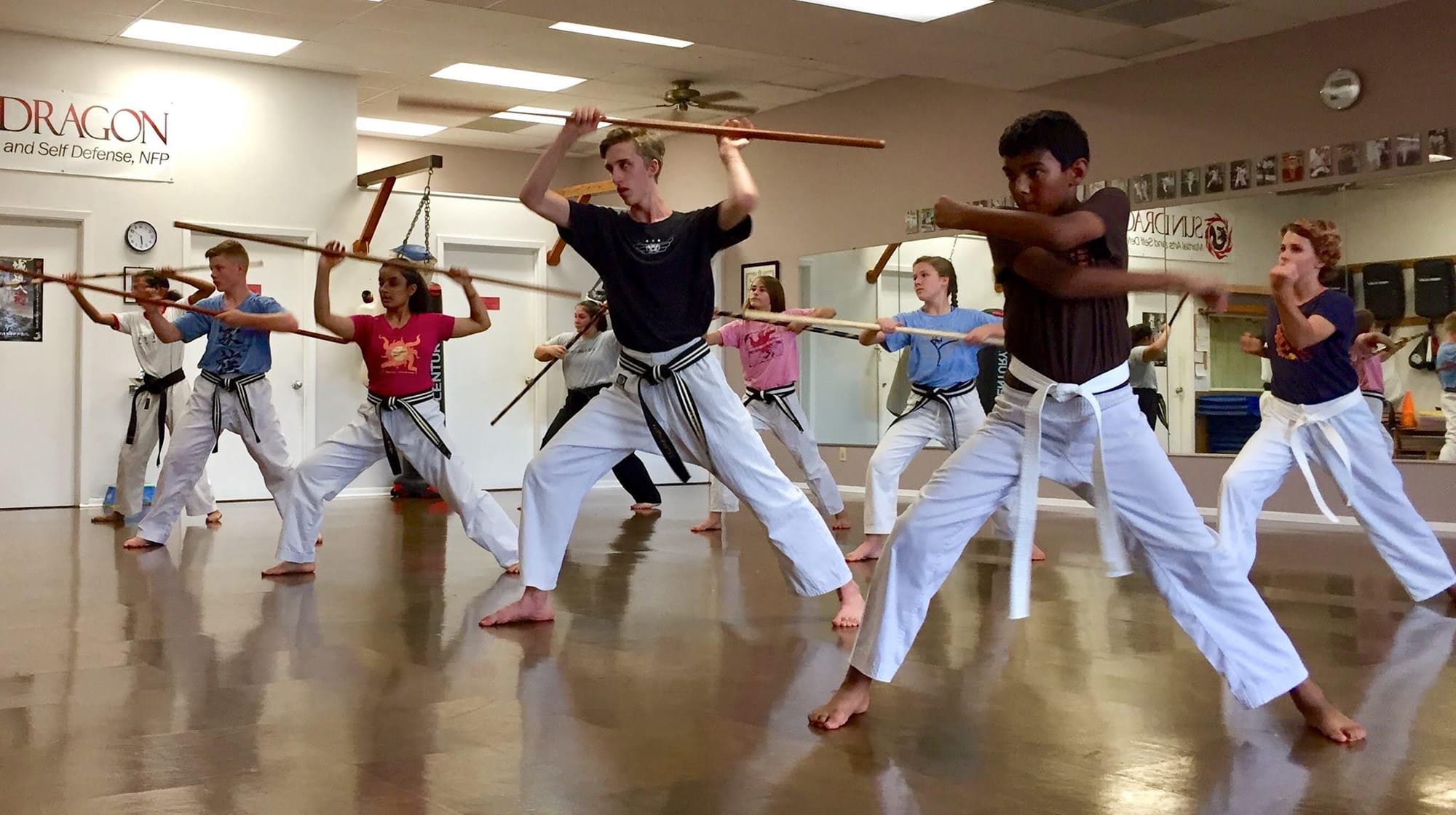
“People of color, people who are queer, who present differently than how people think they ought to be presenting? We have to deal with that sort of stuff all the time,” she said in a phone interview. “That gets old so fast. But when you hear ways of addressing it that feel more comfortable and gets more comfortable over time, then your world gets a little less fraught.”
The Sun Dragon formula is one that is picking up steam in the few LGBTQ-friendly gyms in Texas. It’s a non-profit more focused on serving a community than making money or training champions. Black Widow is currently seeking the same status. Re-contextualizing the nature of MMA and self-defense also has the added bonus of removing the hyper-competitive nature of most gyms. Hayden can still teach someone to break a board (or a knee), but there’s far less striving for dominance in her space.
Houston has fewer LGBTQ-friendly MMA gyms, though Third Ward Jiu-Jitsu is already well-known in the city. Another non-profit, they provide instruction and workshops on self-defense, particularly as part of the city’s LGBTQ activist leagues.
Instructor Andrew Degar and his partner are both LGBT. By day he works in genetic testing, and by night he trains people in Brazilian Jiu-Jitsu. In addition to being a dominating discipline in the professional MMA world, it tends to be a perfect martial art for smaller people because it teaches them to fight from their back on the ground.
Degar and crew opened their studio in Third Ward specifically to highlight their commitment to working with underserved communities. Besides their work with LGBTQ students, there is also a focus on accommodating neurodivergence, another group that is often targeted by bullying and attacks. When Degar moved to Houston from South Carolina in 2015, he found too many gyms allowing toxic behavior for his tastes.
“I was coaching at an MMA gym here in Houston, and I knew that certain students were queer and people would say slurs on the mats,” he said in a phone interview., “I would speak up as a coach, but it matters that the people who are running the space create a safe place for these people to come and learn where they don’t have to worry about people saying slurs.”
A certain amount of exuberant physicality is to be expected in the MMA world. After all, the goal is to learn to hurt someone if needed. Channeling that aspect into a positive thing instead of something based in systemic bigotry requires dedicated focus, something that most gyms seem indifferent to doing.
“I think it could be a lack of empathy,” Degar said. “I think it’s also people usually get into these sports maybe for the wrong reasons.”
Properly done, MMA training teaches confidence and reduces the fear of physical confrontation. Rolling around trying to lock in an armbar is a fantastic way to become familiar with your body and its capabilities. The positive potential for MMA is there, and for LGBTQ people it can offer safety in an increasingly unsafe world.
However, the work on LGBTQ inclusivity in this space is in its infancy. Texas has thousands of gyms and dojos, and only a fraction of a percent of them intentionally provide safe spaces for LGBTQ students, even in the major cities. Villareal has watched the rise of women competitors in UFC and other leagues with pride and hope, but rampant transphobia in that sphere from top stars is a reminder that parity is still distant. They are trying to build their own networks of tournament and workshops in hopes that one day, LGBTQ acceptance in fight spaces will be the norm.
“We all need more self-reflection,” Villareal said. “MMA draws in a lot of insecure people, myself included, who see training as a path to confidence and power. If you haven’t examined your motivations for training, you can easily fall into recreating cycles of domination within yourself and in the culture of your gym. It’s been a long journey for me to learn to love myself and feel confident in my body, and I don’t think this is a uniquely trans experience. What’s good for queer people is good for everyone.”

Comments ()