
Magic And Madness Of Mid-Century Menus in Houston
On display at the Rienzi mansion in River Oaks, is a unique and bizarre display that manages to capture the entirety of the magic and madness of the culinary arts in the post-war period
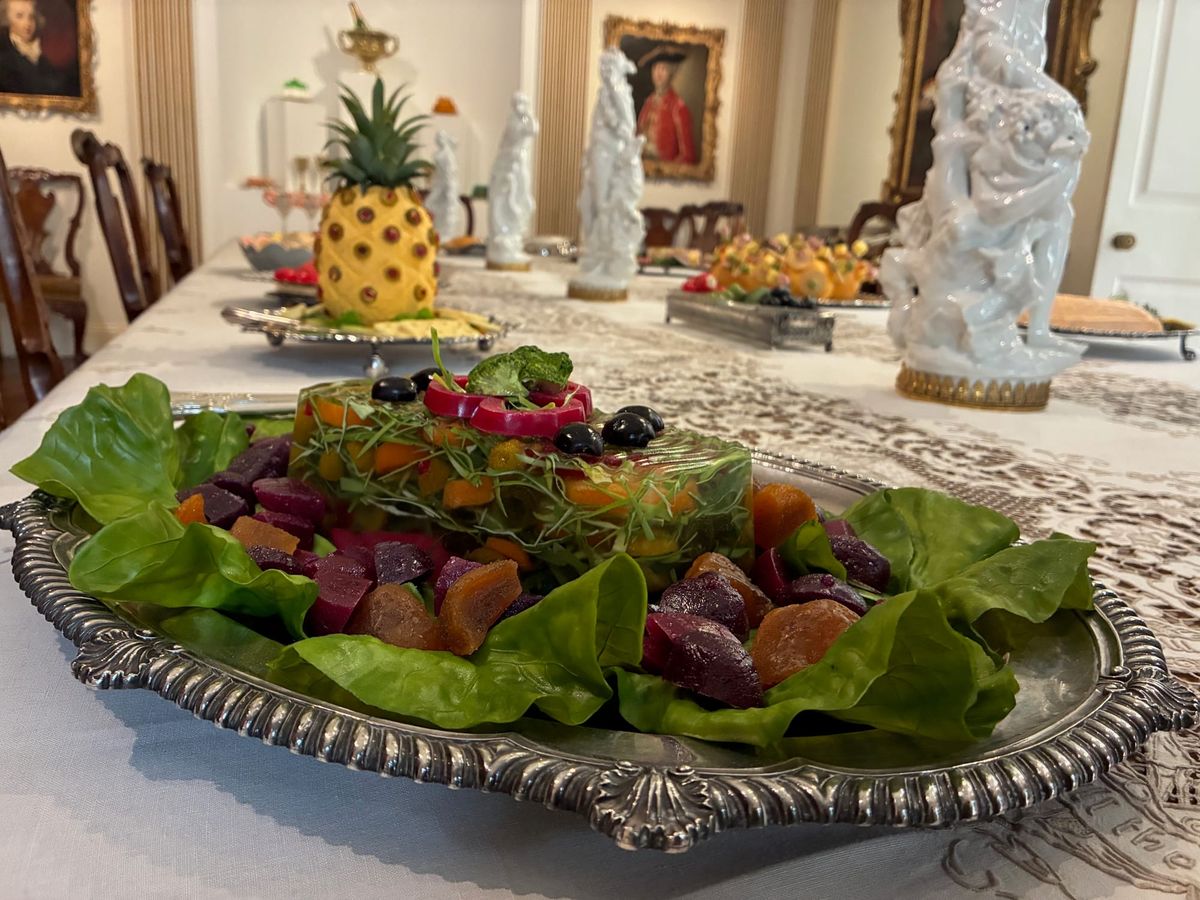
It looks like a pineapple, but it’s liver sausage. Actually, it’s all plastic, but in 1955 it would have been real liver sausage covered in pimentos, and that’s maybe the fifth-weirdest thing sitting on the Rienzi dining room table.
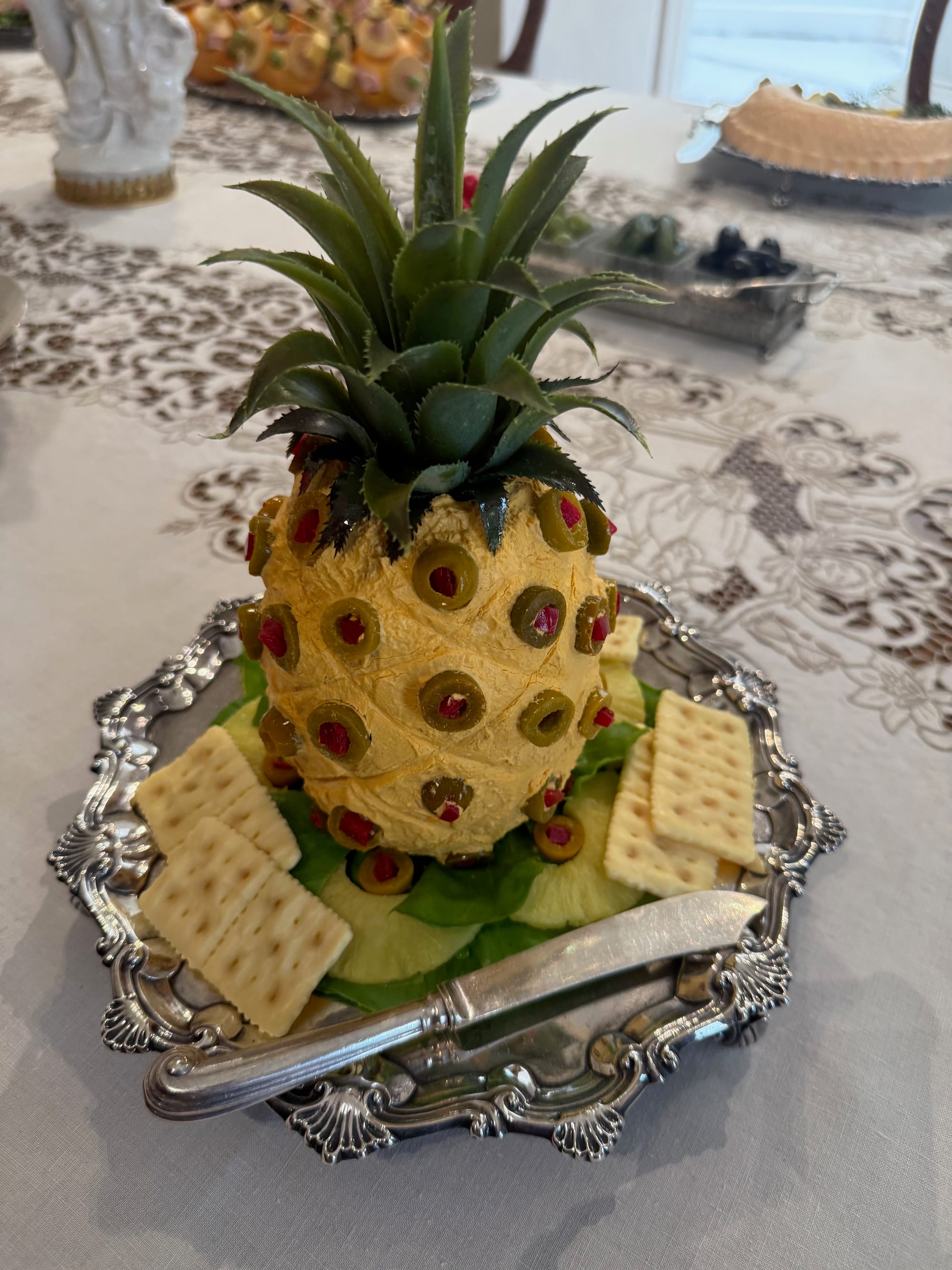
Curator Misty Flores has a lopsided, mischievous grin on her face the entire time she is showing my wife and I around Midcentury Menu: Dining in the Atomic Age, on display at the Rienzi mansion in River Oaks as a satellite of the Houston Museum of Fine Arts through July 31. The home is the acme of timeless elegance, all marble floors, tasteful sculptures, and oil paintings. Hidden in the archives of Carroll Sterling Masterson and Harris Masterson III were a set of well-preserved and clearly well-loved cookbooks from the 1950s, a time when culinary arts went through an experimental phase in America. Those books are the basis of Flores’s strange and exquisite exhibition.
“They left us with a really cool vintage cookbook collection in the kitchen, as well as tons of handwritten recipes,” says Flores. “I started going through those and I thought, you know what? Why not do a table spread in the dining room along with an exhibition that explores how people were thinking about food after World War II?”
What Flores has crafted is a unique and bizarre display that manages to capture the entirety of the magic and madness of the post-war period (at least in regards to food) in just two rooms. A converted bedroom houses the Masterson’s collection of cookbooks, including a first printing of a Julia Childs tome. Flores dug out mid-century advertisements from Time to highlight the way Betty Crocker became one of the first influencers, or how McCormick used spices to paint the idea of the perfect family meal.
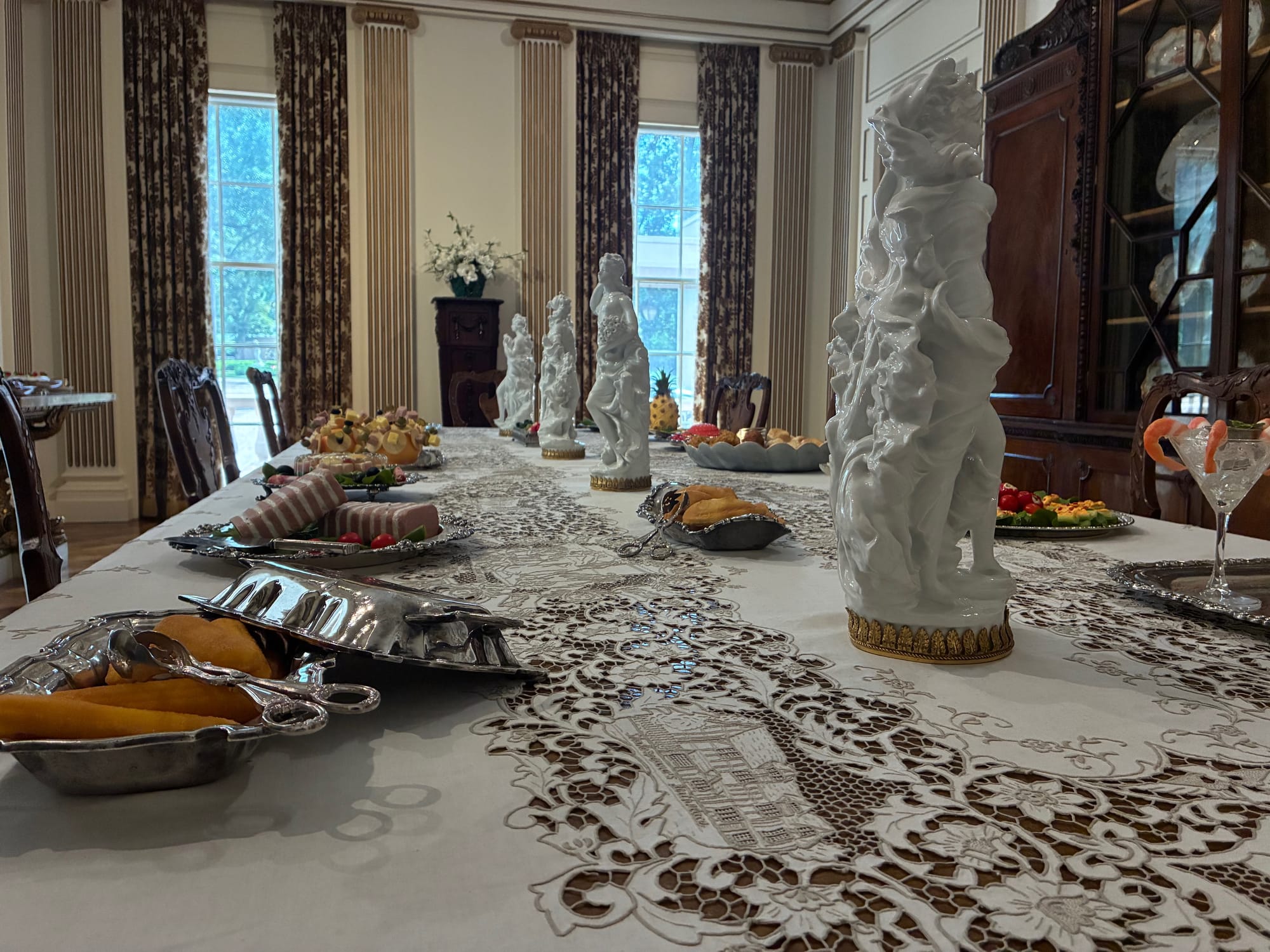
These are all neat, but the real star is the dining room spread where the full-throated insanity of 1950s homemaking arts glistens and wobbles. Flores crafted her spread by commissioning fake food artists and late night sprees on eBay. Some of it seems like a joke, such as ham and eggs set in Jell-O molds. Others look ready for a comeback. The atomic grapefruit, for instance, is a grapefruit with cold cuts, fruit, cheese, and crackers mounted on a grapefruit via toothpicks in a way that resembles a tasty bomb. Now that charcuteries and worries about the apocalypse are back in vogue, I could see this being a big hit at parties if we could afford parties.
Why did food prep in the 1950s go screaming into the uncanny valley? Flores believes it’s a potent mix of post-war optimism and a disconnect from how food actually got to the table.
“The birth of the supermarket changed everything for people,” she said. “It's the one stop, but it also removed people even further from the source of where their food is coming from.”
There is a small section of the exhibit dedicated to the farm strikes of the 1960s, something of keen interest to Flores, the granddaughter of immigrant farm workers. On one hand, white America is inundated with shining new kitchen appliances, ease of shopping through supermarkets, a small wealth gap, and the idea that buying things was itself a blow against the existential threat of communism. On the other, immigrant farm workers were toiling in brutal and unfair conditions to provide the basic components of this magical life.
And it really was magical. After decades of survival mode from the Great Depression and World War II, white America had the funds, tools, and time to experiment. Gelatin, which had originally been something only the wealthy could afford, now came in cheap powdered form, hence the parade of jiggly concoctions that are showcased in so much midcentury food presentations. Cakes got wilder, entertaining became a social competition, and husbands who served overseas brought back appetites for international flavors.
“Now you can play,” said Flores. “There's more money, you're living in the suburbs, and everything becomes very mechanized. And sometimes I just wonder if these advertisers were just like daring people to try things.”
Concise as a tweet and unhinged as an AI fever dream, Midcentury Menu is a curation masterpiece. For a brief span of time, America treated food as a avant garde art and socio-political propaganda while ignoring the injustice that made it possible. On the shelf of the dining room in Rienzi sits a Jell-O aquarium, where carrot fish are frozen in a gelatin sea surrounded by rosemary sprig-kelp.
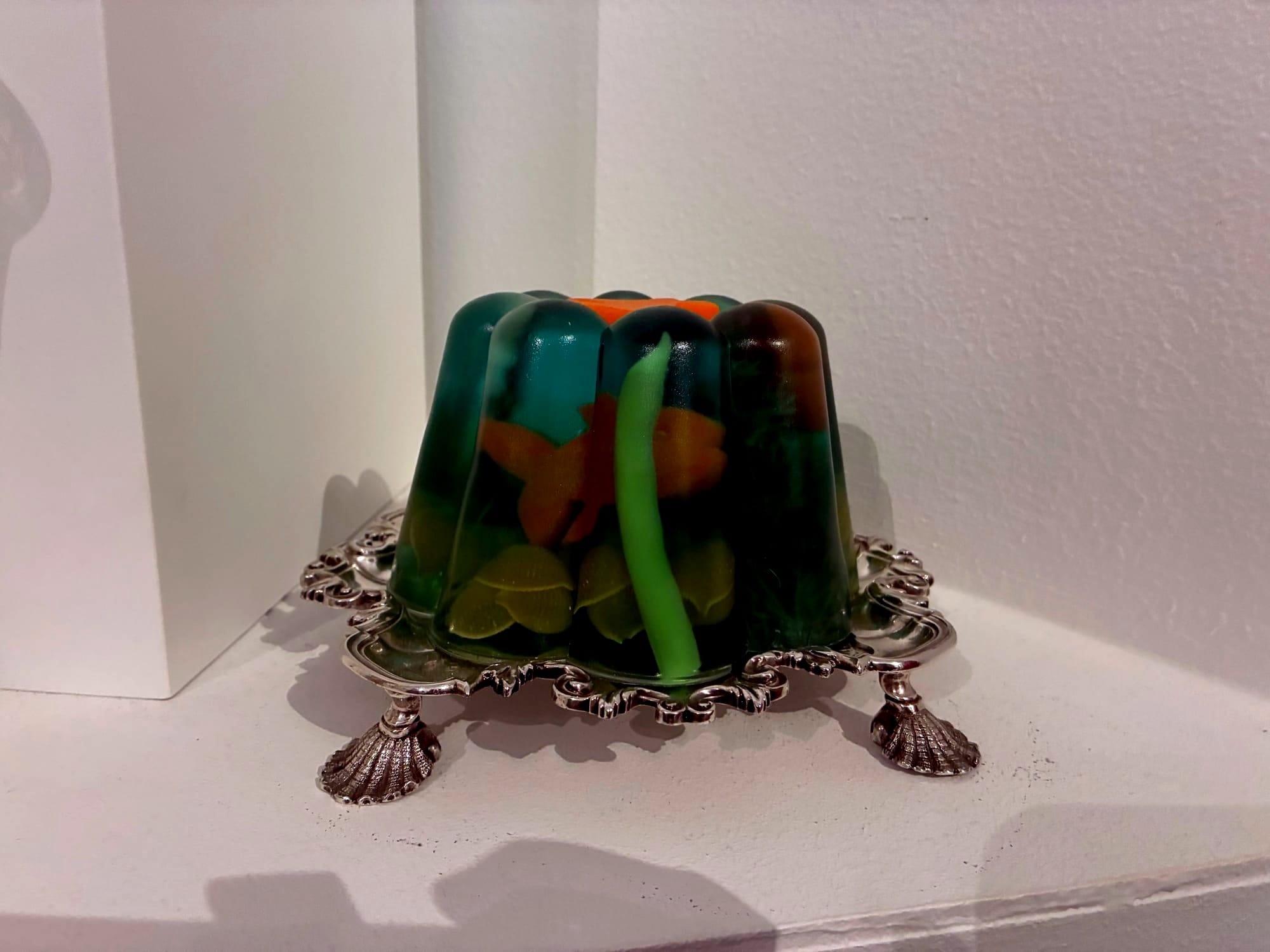
It was never meant to be eaten, just admired. For people just a few years removed from rationing sugar and the poverty of the Depression, it represents a continental shift in the American mindset worth dissecting. Understanding a liver pineapple is certainly more beneficial than eating one ever was.

Comments ()