New Exhibit Explores Connection Of Good Medicine And Art
Dr. Jayasimha “Jay” Murthy is both a Houston pulmonologist and artist. His latest exhibition is "World: Photographs," a collection of about a dozen of Murthy’s photos from across the planet.
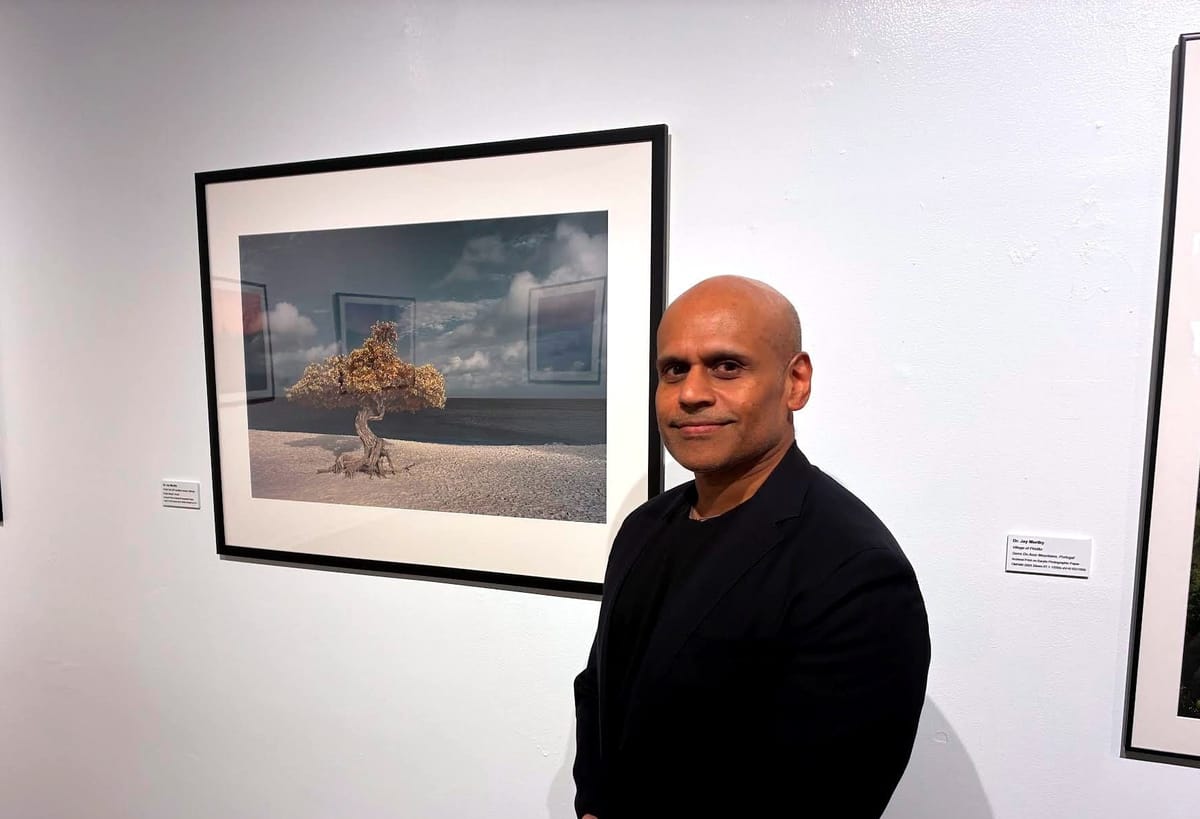
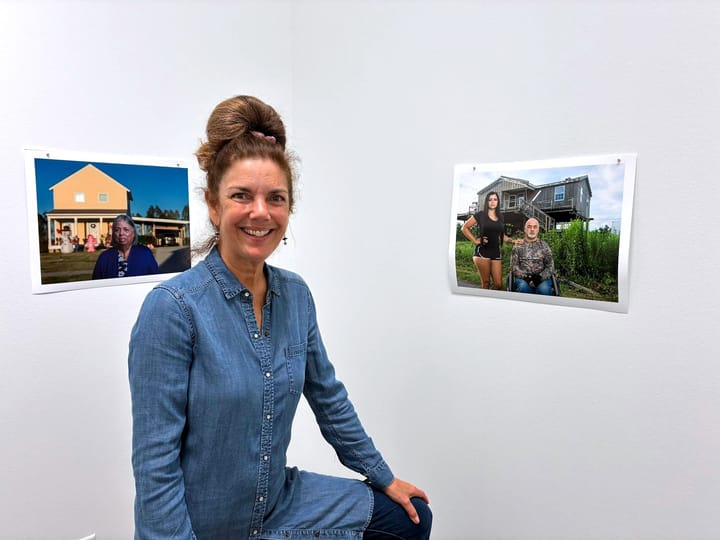
Dr. Jayasimha “Jay” Murthy has the calm demeanor of a monk, which is no small feat on opening night for his show in the Houston Museum of African American Culture. A small band is playing in the courtyard outside, the bass guitar throbbing enough to make the photographs hung on the walls of the Bert Long Gallery vibrate just slightly. Outside the room, children run in and out of the legs of adults marveling at the other artists opening exhibitions, Ashley Lopez’s incredible yard portraits and the multi-media canvases of Clarence Heyward downstairs. It’s a busy night.
Yet Murthy seems comfortably at ease surrounded by his work. The 53-year-old Houston pulmonologist returned to art in 1998 after becoming a respected, board-certified doctor treating asthma, COPD, sleep apnea, and interstitial lung disease around the city, including at Houston Methodist. Before the rigors of attending St. John's Medical College in India and his subsequent career ate up all his time, he’d been an avid watercolorist. By his own admission, he still loved art as much as he ever did, but the clock is a hungry mistress for a medical student.
“I came into digital photography because it's faster for me to understand the composition, to shoot, and to process rather than a long painting,” he says, gesturing to his work around him languidly.
The exhibition is World: Photographs, a collection of about a dozen of Murthy’s photos from across the planet. He specializes in landscapes and loves a sunrise. There’s something funny about a doctor who works on sleep disorders intentionally getting up a couple of hours before dawn to capture the perfect shot, but the results speak for themselves.
Murthy does for photography what digital imaging does for detecting diseases. That may sound gross, but it’s the level of intense clarity in his photographs that make them so eye-catching. The stark, shadowed mountains against a red sunrise are so bold the photo looks almost like the flag of a fictional utopian country.
The crown jewel of his show is a mesmerizing shot of the famous Fofoti tee on the shores of Eagle Beach in Aruba. The strange, gnarled trunk twists into a colorful explosion of greenery that stands out sharply against the blue water and white beach. It’s easy to see why Murthy was captivated by the tree, with its alveoli-like plumage set against the soothing waters of the Caribbean. The meshing of the medical and the pastoral in Murthy’s work is not accidental.
“When I went into my fellowship, training as a lung doctor, I started working in electron microscopy, taking images of cells and so on and so forth,” he says. “Ultimately, when you capture the image on an electron microscope, it's a digital photograph.”
Murthy is part of a trend of doctors incorporating art into their lives in a way that makes them more accessible to patients. For instance, since 2016, Rice University in Houston has offered a medical humanities program that incorporates art-training into medicine. Part of this is because a few drawing skills often come in handing for doctors.
More than that, an art practice simply makes better doctors. More and more universities are building these hybrid humanities programs because it increases self-awareness, attention to detail, and communication skills. A 2018 study found that attention to the arts made doctors better listeners, which in turn made patients feel more comfortable.
“Medicine, at the end of the day, you're dealing with human beings,” says Murthy. “Even though you may have the science and the evidence and everything so kind of concrete and kind of lifeless and dull and clinical, you still need the warmth of humanity to convey those feelings and connect. Only when you connect, do you understand the other person's problem, and only then you can offer them a solution that they're willing to accept. Because nobody wants to accept anything from a stranger.”
Murthy’s work hangs in his own office as well as at the HMACC. When patients come in to see him, they know the person treating them is interested in things beyond billing hours and test results. A photograph of a sunset over a lake may not cure a lung issue, but it’s a good sign that the person in charge of your care knows you’d like to be healthy enough to see the same beauty yourself.
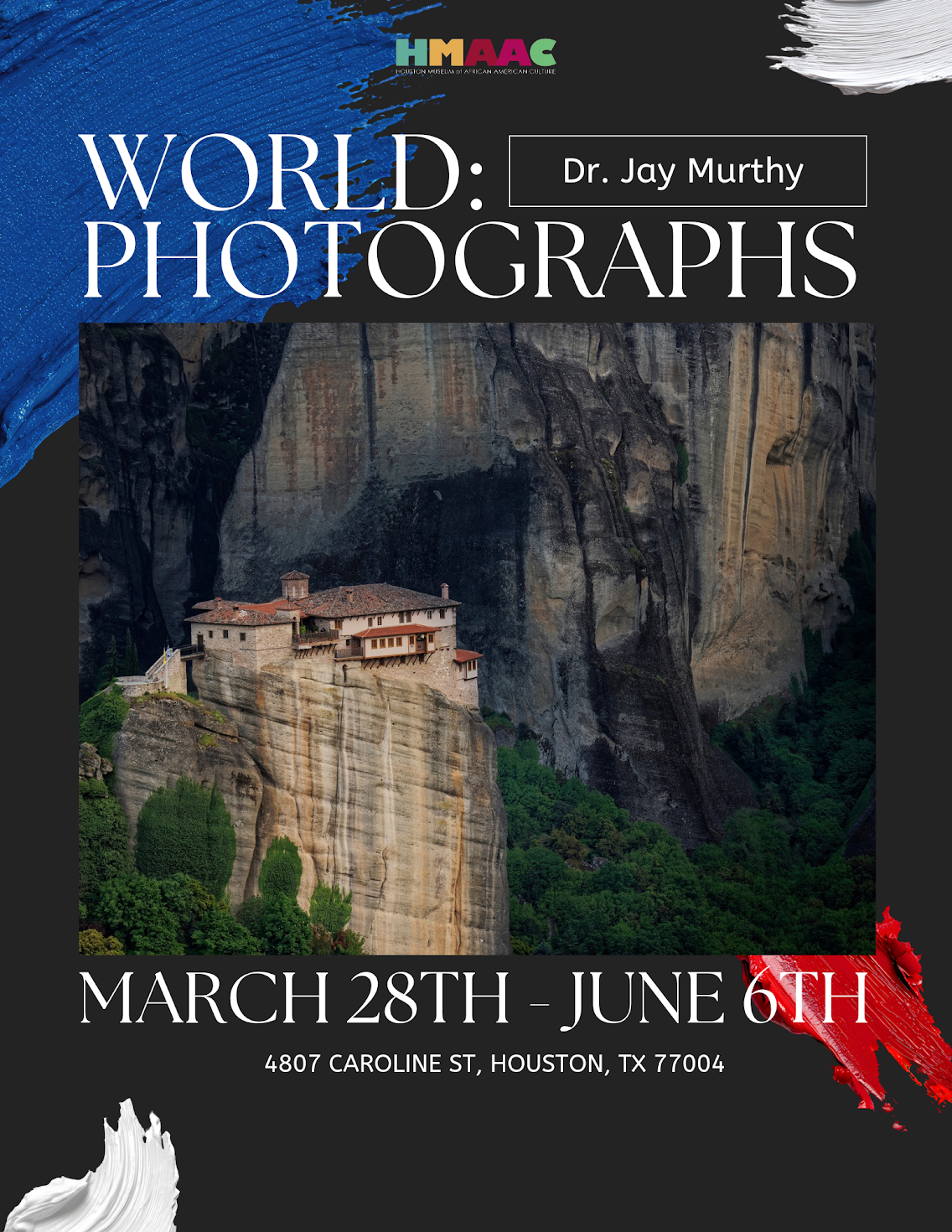
World: Photographs is on display at the Houston Museum of African American Culture through June 6

Comments ()