
The Trail Helping Houston Regain Freedom From Roads
Transforming the trail into something actually useful started in stages in 2009, but the formation of the Friends of Columbia Tap Trail really got the ball moving
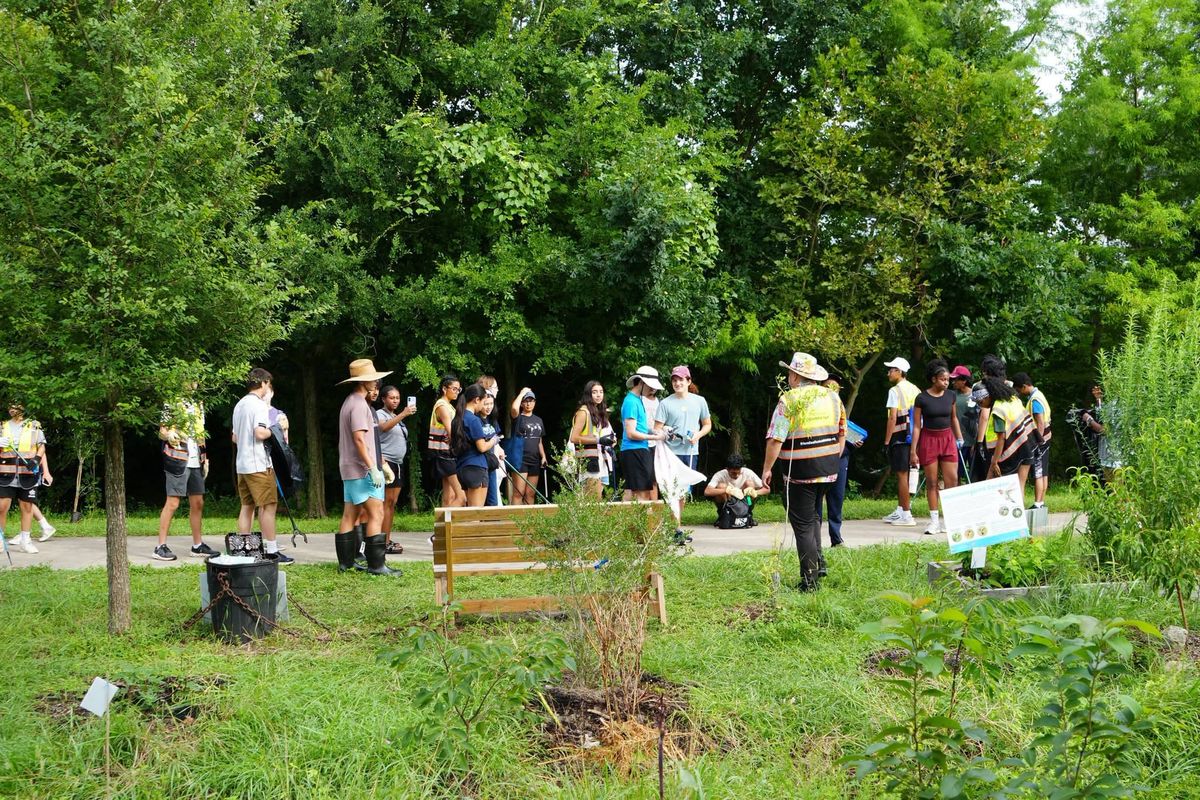
The late and legendary Houston journalist John Nova Lomax once walked the entirety of Westheimer, 16 miles from West Oaks Mall (now nearly abandoned) to where it turns into Elgin in Midtown. It’s a fun piece of gonzo journalism, but what stands out is the hostility Houston has to the very concept of a pedestrian, even along arguably the most important road in the city. Every person Lomax encountered on his trek thought he was insane. Houston is a car town.
But maybe that’s finally changing, and the revitalized Columbia Trap Trail is a good example.
When the FIFA 2026 World Cup was announced, the Houston Host Committee used the event as a catalyst to fund half a billion dollars in improvements to the city, chief among them walkways like the Green Corridor. Eager to impress the visiting residents of more walkable countries, Houston was transformed into something vaguely resembling a walkable city, at least around the sports district.
Ed Pettitt, head of the Friends of Columbia Tap Trail, saw the chance to bring the trail back to life.
“We worked specifically [with the Houston Host Committee] sustainability subcommittee, to make sure that the Columbia Tap was part of the Green Corridor,” said Pettitt in a phone interview. “At first it wasn't. At first the Green Corridor was just Main Street and getting people to use Metro to go up and down to the games and planting a few trees on Main Street. But we said, hey, we already have an actual green corridor that connects downtown to NRG [Park].”
The Columbia Tap Trail is a four-mile-long path that connects East Downtown (EaDo) to Third Ward and Bray’s Bayou. It’s actually one of Houston’s oldest thoroughfares. According to Pettitt, it started life as a pre-Civil War railroad linking the sugar and cotton plantations of Brazoria County to the Port of Galveston, then the largest cotton export port in the world. The railroad was constructed using slave labor. Expansions and maintenance of it continued that way even after emancipation as Black convicts were forced to work on it or sent along it to other projects.
The railroad eventually died, and the land became a polluted, industrial access path filled with ditches, electrical infrastructure, and junked machinery. However, it never stopped being a pathway completely, even when redlining and highway construction blocked access to Third Ward. Still, it was a mess without sidewalks or safety features. That antipathy for walking Lomax experienced on Westheimer went triple here.
“It. was a great shortcut between Downtown the Medical Center, but a lot of the residential streets along the trail were dead ended,” said Pettitt. “They put up barricades, they put in drainage ditches. At Cuney Homes, for example, the oldest, largest public housing complex on the trail, there were over thousand residents that even though they lived right on the trail, had no pedestrian access to it.”
Transforming the trail into something actually useful started in stages in 2009, but the formation of the Friends of Columbia Tap Trail really got the ball moving. Now, the four mile length is paved with a ten-foot-wide cement path that is perfect for walking, biking, skating, and more. Most recently, they completed an innovative new installation, a sunshade made of recycled wind turbines decorated by muralist Hannah Bull.
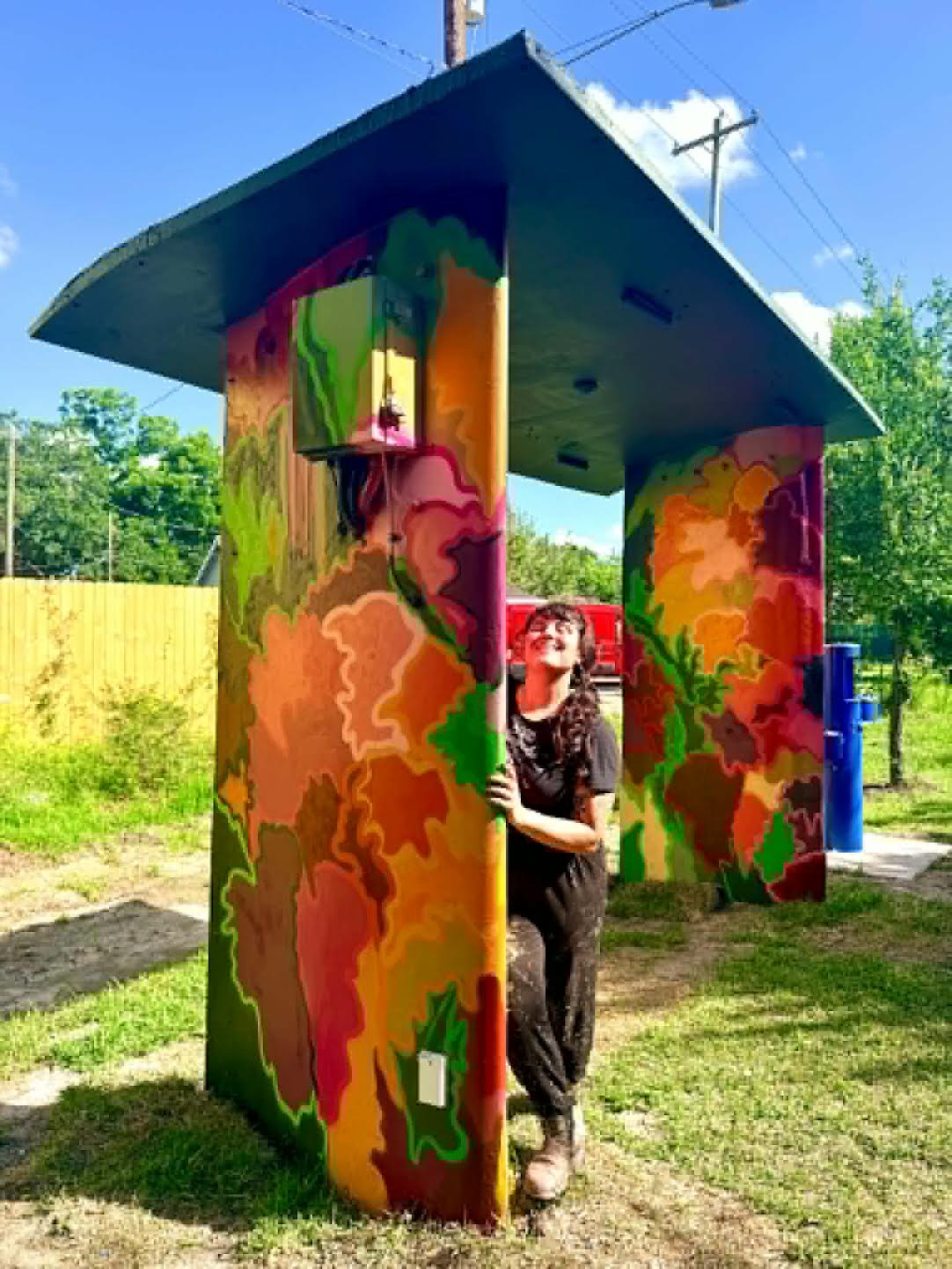
For two years, pretty much every muralist in Houston had been recruited to paint soccer-themed pieces all over the city, but Bull had little interest in that. Her work has always tended toward the natural, so she was ecstatic when Pettit asked her to paint the sunshade.
“I was like, well, this is like the only thing I'm willing to do for FIFA,” she said in a phone interview. “And then he told me about the recycled wind turbines. I thought it was really interesting. They gave me a pretty intense deadline, but I just made it work.”
Located where Berry Street meets the trail between Alabama and Holman, Innovation Node (as it’s dubbed) is a combination shaded rest stop, water fountain (for humans and dogs), and charging station that uses solar panels to power mobile devices or electric bikes. The unique construction came about through the University of Houston’s research project “Feasibility Study of Structural Reuse of Decommissioned Wind Turbine Blades as Highway Overhead Sign Structures,” led by Dr. Gangbin Song, which aims to find a home for the enormous blades outside of landfills. Bull decorated the Innovation Node in her trademark drip floral style, covering it in fauna and flora from around the area.
Already, the new Columbia Tap Trail is coming to life. Bull noticed both wild peacocks and chickens roaming the green space while she worked. Pettitt, who takes the trail regularly, says that he has encountered scores of people using it as a transit path that avoids congested and sometimes dangerous Houston streets. They walk or bike to work in the Medical Center, or visit the Manna House food pantry near the trail, or just enjoy the walk. Even the heat isn’t keeping people away.
“It's funny because a lot of people will tell you, especially this time of year, Houston is too hot and humid to bike or walk, and that's just not true,” said Pettitt. “If you build the right infrastructure, you can decrease the temperature by 10, 15, upwards of 20 degrees and that will make a huge difference between getting heat stroke and being able to walk comfortably or at least safely to your bus stop or your neighborhood grocery store or washeteria or wherever you're going.”
It’s been a long road from a broken greenway with little access to a shining emerald in Houston’s burgeoning network of paths. The World Cup put extra funds and initiative into the Columbia Tap Trail, and it’s already looking like the unquestioned need for an automobile in Houston might be waning.
In Lomax’s original essay, he remarked how Houstonians would look confused at him when he referred to himself as a pedestrian. If only he had lived to see his city start to take back the trails.
“Columbia Tap, it's getting more and more beautiful every day,” said Bull. I definitely saw a lot of people walking from various walks of life. It wasn't just-- it was very diverse. I see people that are teachers like walking back and forth from TSU on their bikes and I can tell that it's more densely populated, especially just it's just more lush. I think the lushness is attracting people.”

Comments ()