
New Show Reframes Black Art As A Comprehensive American Story
Instead of trying to capture a particular artist’s statement, Bayou City Stewards is an extremely broad collection of art by Black creators that spans multiple disciplines and dozens of styles
I was alone in the upstairs Bert Long Jr. Gallery of the Houston Museum of African American Culture, staring at a small red box of dominoes on a nondescript kitchen table with two chairs beside it. There was no label anywhere I could see, no attribution, and no way for me to contextualize what this strange sculpture in the Bayou City Stewards showing was supposed to mean. Was it statement on lost Black Americana, forcing us to feel the absence of people in a game unplayed? An anti-portrait?
“These are the actual dominoes that Jesse Lott used,” said Jillian Simpson, the chief administrative officer of HMAAC, who came to find me and show me around. “It’s meant to show you the life that was happening around this art being created. This space is meant for people to come in, touch, look through it and see some of the inspirations.”
Just regular dominoes, but also so much more than that.
Bayou City Stewards flies in the face of what an art museum typically is. India Lovejoy and Rachel Simon, who helm the Collect It For The Culture series, produced the series for The HMAAC, which is a welcoming space but still has museum vibes most of the time. There’s an inherent sterility and distance that comes from displaying art on museum walls. It’s like being told your dinner host brought out the good plates, which makes you feel you have to live up to the expectations of the plates. Hence my desperate quest for an artistic thesis over a box of dominoes.
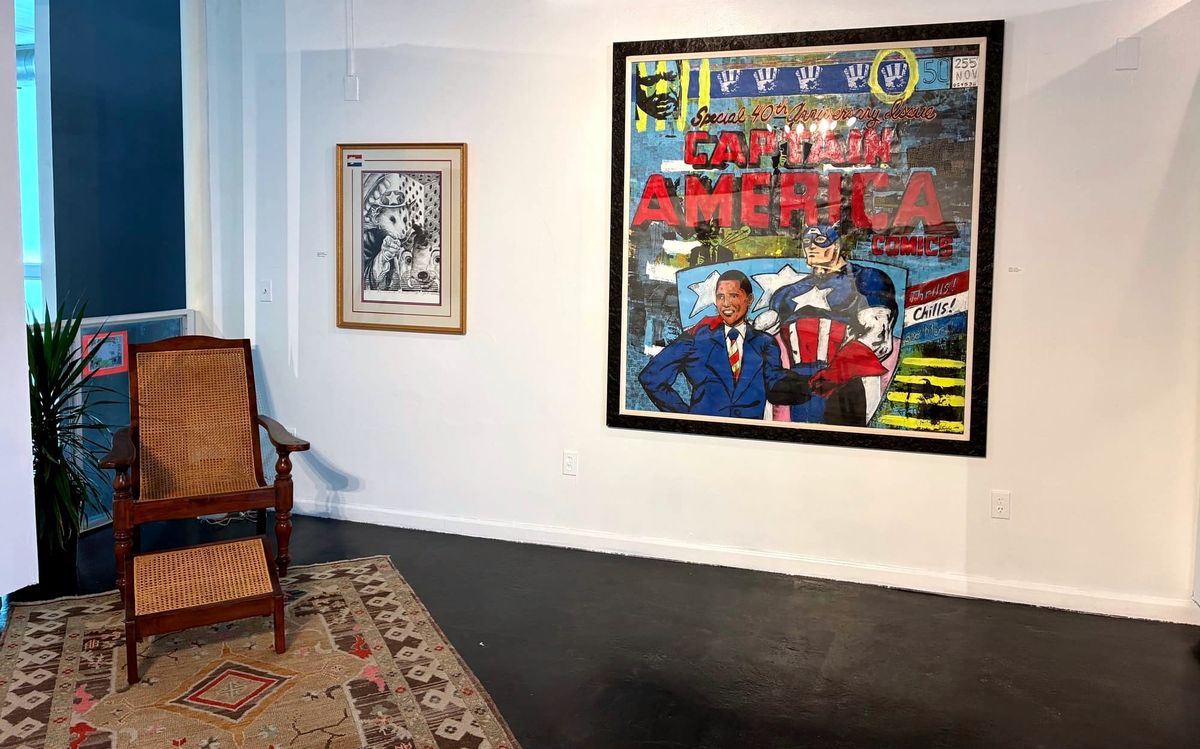
Instead of trying to capture a particular artist’s statement, Bayou City Stewards is an extremely broad collection of art by Black creators that spans multiple disciplines and dozens of styles. Each one is presented with an attribution to the person who collected and preserved it, from Houston luminaries like Robert Hodge to the leftover former products of an old print shop. The collection is sort of vaguely mid-century, though there are enough more recent creations an argument even against that label.
What do you do when you take a big bite of almost the entirety of Houston’s Black arts across decades? How do you even begin to digest that without losing yourself.
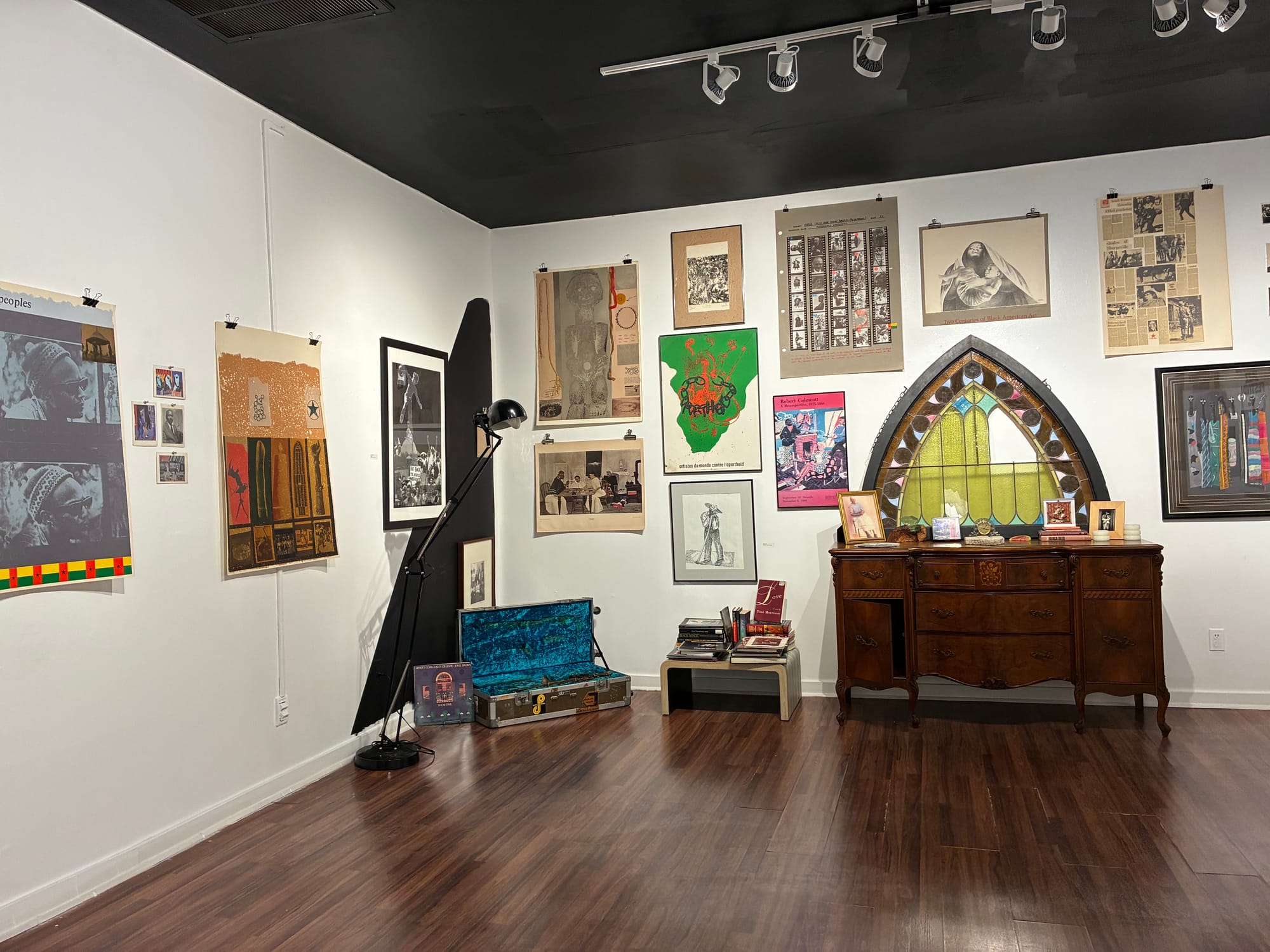
HMAAC settled on what they call the resource center. In the Long Gallery, the art is surrounded by simple kitchen tables, office desks, and the sort of chairs your grandma told you not to sit in after you were playing outside. Paintings hang beside giant prints of famous album covers from Lightnin’ Hopkins. There are old catalogues from shows by Black artists, intentionally dog-eared so you know you can touch them and look through them. It’s a space to exist in and remember that people often bought Black art just because they liked the way it looked in their home. The result is closer to Meow Wolf than MFAH, an immersive experience in art.
“One of the intentions of the exhibition is to make it feel like living art,” said Simpson. “When you see chairs and tables throughout the exhibition, it’s meant to evoke your living room. It’s meant to show that you live with this art. Like this art is part of our lives and it’s ever evolving. It’s never static. It’s meant to do that on purpose because this entire collection comes from people’s homes.”
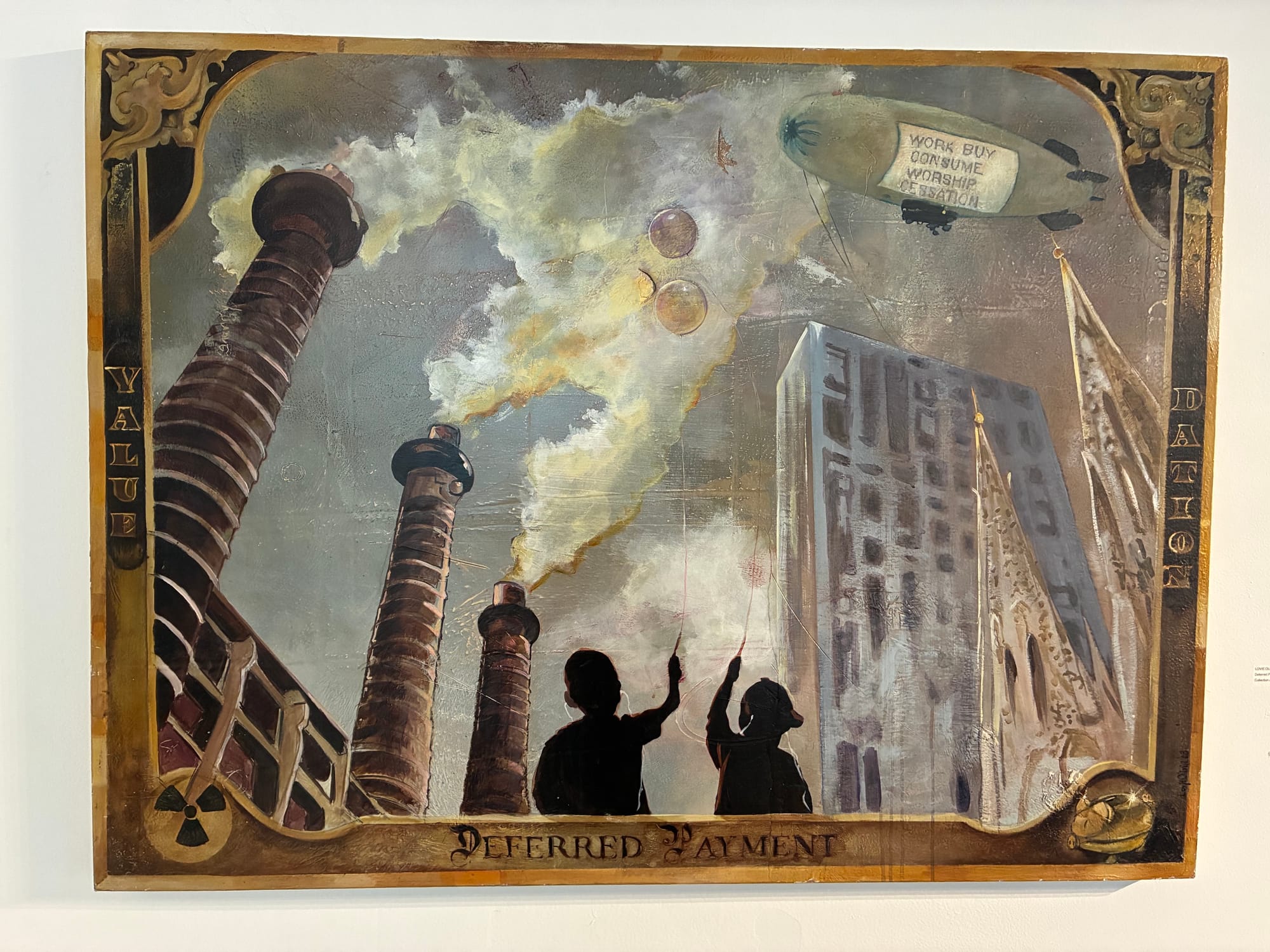
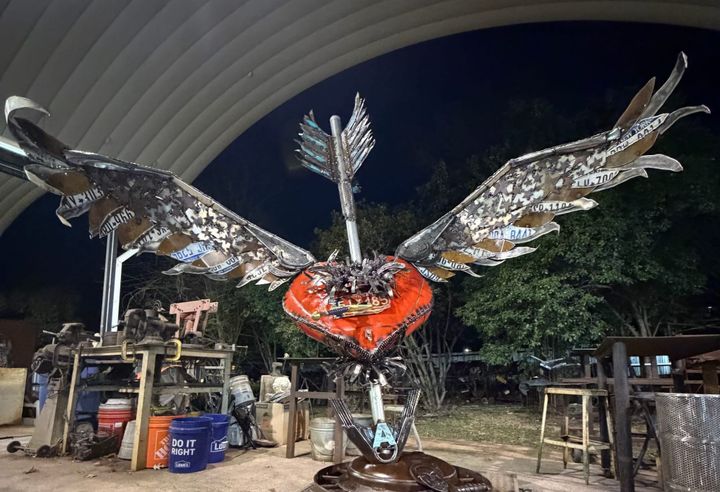
Don’t get me wrong: there’s plenty of high art on display. A colossal statue by Jesse Lott (owner of the dominoes) dominates the second floor and probably wasn’t the sort of thing you’d see in a Third Ward parlor (on a lawn in the Heights? Maybe). There’s a lot more “museum” vibe to things like Charles White’s haunting pencil drawing “I Have a Dream, 1979” or Robert Freeman’s stunning painting “Black Tie – The Social Season – 1990.” You can definitely feel like you walked away from Bayou City Stewards having indulged in prestigious cultural exploration by gifted masters if you need that.
But even these pieces are still with us and viewable thanks to home collections. People in Houston bought these pieces, usually just because something about them touched their hearts. That feeling of personal meaning is what ties the show together. What it lacks in a spear point of a single creator’s intent it makes up for in the swirling zeitgeist of Houston. In a way, it’s like looking at picture of the city through a kaleidoscope.
Bayou City Stewards is on display through August 29.
Comments ()