
The Sculptures Reframing Women’s History In Austin
On October 27, artist and filmmaker Tiffany Shlain will be unveiling her latest work in Austin (just in time before the midterm election)
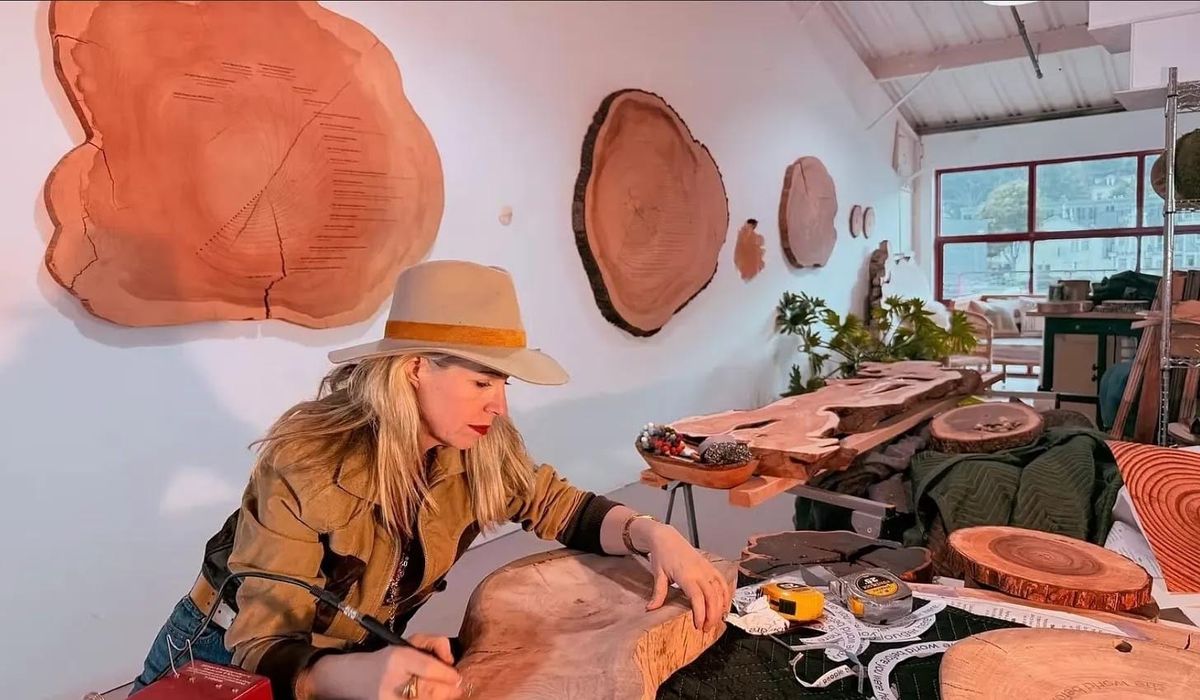
For artist and filmmaker Tiffany Shlain, changing the lens of history to a feminine one first involved throwing out even the basics of a calendar for something more ancient and powerful: tree rings.
There are few things on Earth that are more ancient than trees. They were already old when the first vertebrates evolved on land, to say nothing of sheltering the apes that later became us. Theophrastus and Leonardo da Vinci deduced that the concentric rings in a felled tree’s trunk were an annual calendar, though an ultimately impractical one for human needs most of the time. After all, to tell the year, you must destroy the tree.
San Francisco artist and filmmaker Tiffany Shalin’s latest work embraces the idea that you have to tear something down to look at human history in a new way. In this case, it’s a timeline focused entirely on women’s contributions to history. Dendrofemonology: A Feminist History Tree Ring is a pairing of sculpture and film set for a one-night installation at the Austin Central Library on Tuesday, October 27.
Shlain will be in town to explain the sculpture and debut the latest versions of her short film about its creation, We Were Here. As the midterm elections loom, Shlain felt making an appearance in Texas was important thanks to the state’s unusually close races this year and dramatic anti-reproductive choice legislation over the past several cycles.
“Texas has some of the most draconian laws in the country around abortion,” said Shlain in an interview. “Providers can get up to 99 years in prison. My father was a surgeon, and he used to tell me stories before Roe v. Wade of women giving themselves abortions with coat hangers.”
The sculpture is simple but breathtaking in its scale. The thin cross-section of the tree dwarfs its creator, lending majesty to the dead lumber. Shlain learned pyrography (the art of fire writing) from Rachel Strauss and Basia Chmielowiec, who taught her the delicate art of burning words and images into wood. Shlain was hesitant at first since it’s not a medium where mistakes can easily be rectified, but she grew to love the primal feeling of etching into parts of ancient trees.
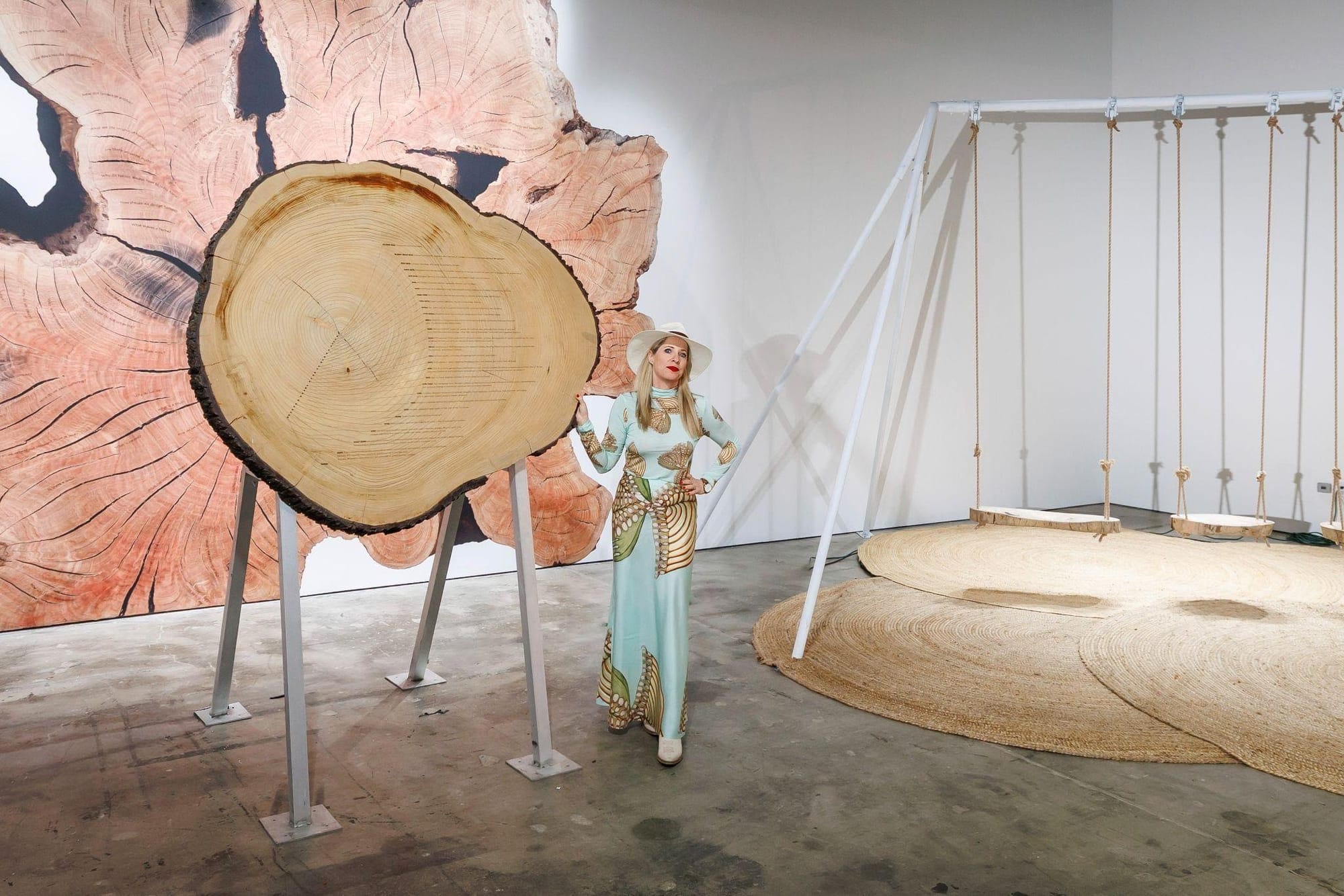
Her timeline starts roughly 50,000 BCE, when mother goddess totems flourished across Europe, which may have indicated widespread matriarchal worship practices. She lists China’s only known female ruler, Zu Zeitan; Queen Amina of Zazzau (now-Nigeria), and Valentina Tereshkova’s solo space flight as an example of the milestones. It’s an uncommon list of history enhanced greatly by the tree it is carved into, which forces the viewer to think of human accomplishment in different ways than man’s works.
“The more digital the world's becoming, the more I want to work with wood,” said Shlain. “It’s the opposite of the digital world. It's context. It's permanence. Monuments are normally made out of granite, and they often represent ideas that no longer fit society and these are wood and organic and feel more female and of the Earth.”
This appearance in Austin will be Shlain’s first visit with Dendrofemonology to the South. It’s an area where many women feel their rights have been opposed and rolled back. Shalin is also using her calendar of women’s history to help push the Equal Rights Amendment, a constitutional amendment that would prohibit gender-based discrimination and which has been inches from ratification for decades. It faltered in the anti-feminist backlash of the 1980s, but Shalim thinks that it could restore what she sees as lost equality.
“I speak to so many women that don't really understand that they don't have equal rights in this country,” said Shlain. “It's not enshrined in the Constitution. So, in the midterm election, look at the people we're voting for up and down the ballot. How do they feel about the ERA? And I everyone's talking about AI and a million other things, which are important, but women's rights should be right up there on the top of the list.”


Comments ()