
Joaquin Soto Turns Twisted Metal Into Gods
The preoccupation with surviving trauma permeates most of Juan Soto’s work. He combs through junkyards looking for old cars that have the donor materials he needs.
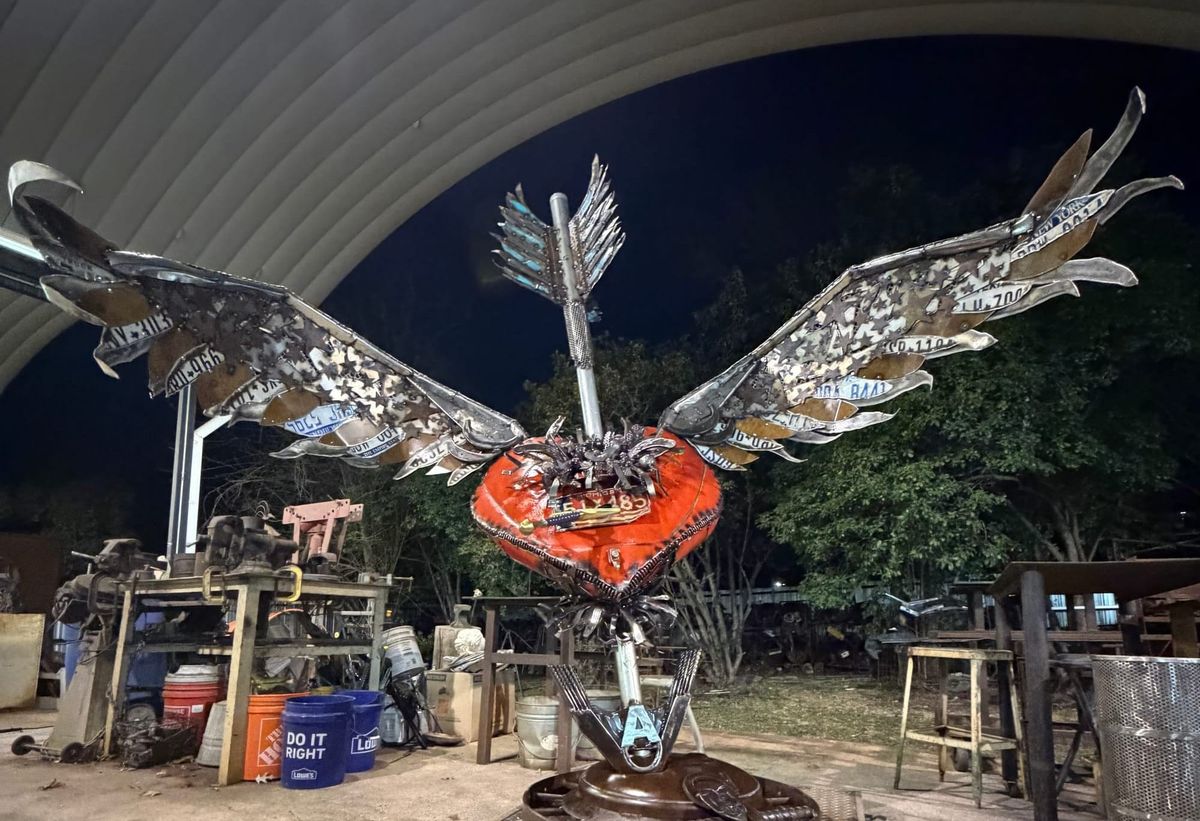
When he was 20 years old, Dallas-area sculptor Joaquin Soto nearly died in a car accident. Something changed in the young artist, and he has spent his career since then tearing apart cars to remake them into something twisted and beautiful.
“I think it’s kind of like a redemption, like feeling control, like not living in fear,” he said in a phone interview. “For me it was just kind of figuring out, all right, what happens now? How can I not let that affect me?”
Metal sculptures are a somewhat underappreciated art medium. The gallery system has a hard time selling them, and the artists who specialize in them tend to come from the more working-class side of things. You’re more likely to find a welder with an artistic side than an artist who wants to get metal.
It happens, though. Soto moved to Grand Prairie from Guadalajara, Mexico when he was seven. He fumbled with the language and wasn’t sure what to do with his life until he was placed in an art class. It was too late to change his schedule, so Soto stuck it out until he discovered a love for painting. Eventually, he would graduate from the University of North Texas with a degree in Visual Art Studies.
Soto enjoys painting, but it’s the metal that calls to him and has formed the basis of most of his work.
“I felt that it was the easiest way for me to express myself,” he said. “I can beat the metal. I can heat it. I can bend it. I can do all these things without having to worry about it falling apart or exploding on me. If I don’t like it, I can just cut it away and redo it.”
Soto’s work can be found all over North Texas, mostly standing in yards. His latest exhibition is Beauty from the Discarded, which will run at the Artspace of the Americas from October 30 to December 18. Soto will be hosting an artist talk opening night.
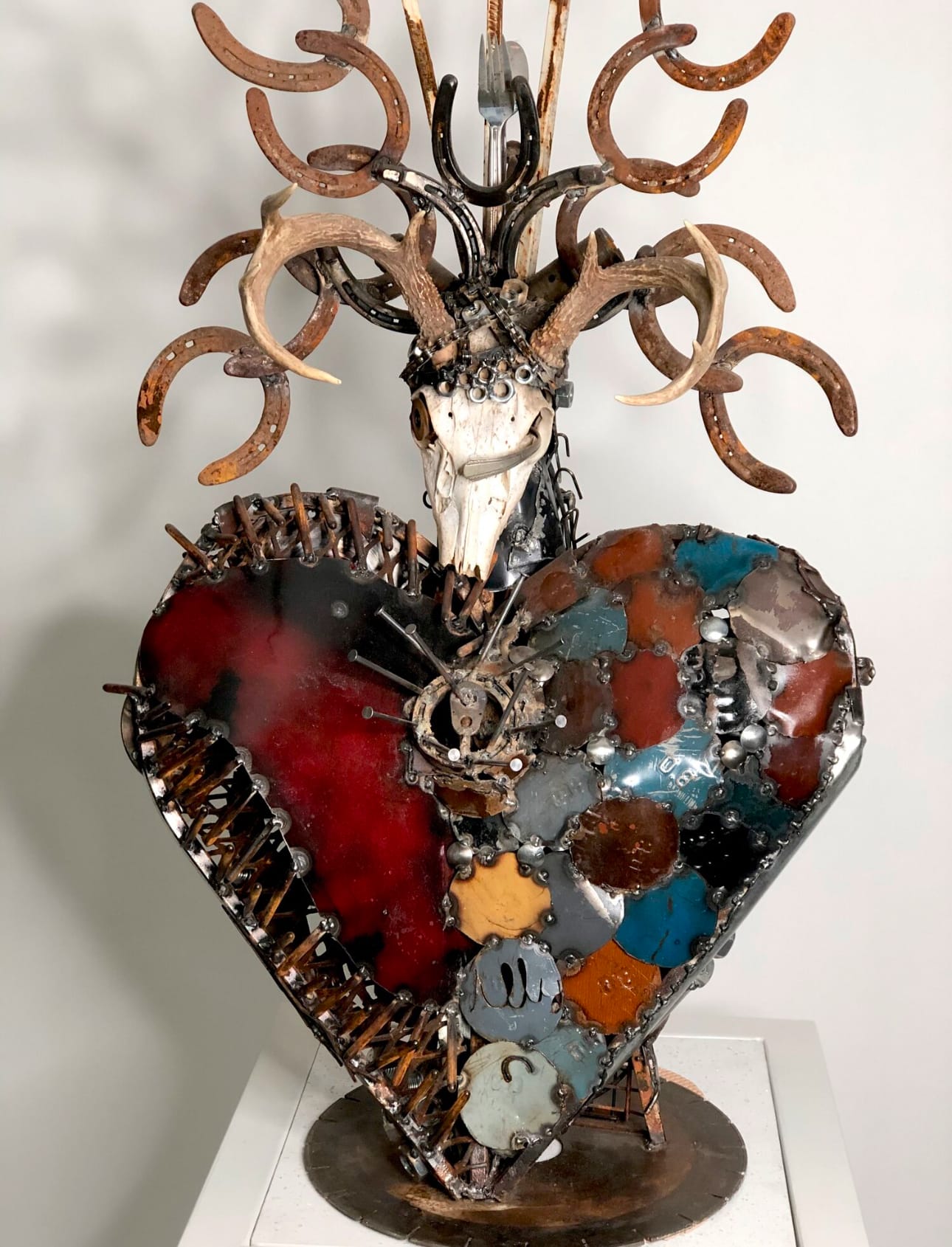
The preoccupation with surviving trauma permeates most of Soto’s work. He combs through junkyards looking for old cars that have the donor materials he needs. Then he cuts, welds, and hammers them into new shapes. Human body parts are a favorite subject of his, such as a glistening chrome heart with bike chain veins that looks like it was pulled from the chest of a Transformer.
There’s an inescapable violence to it. Though beautiful, most of Soto’s work has sharp edges that look jagged and dangerous on top of the inherent weight of his materials. One of his hearts includes an actual sword stuck through it, which he encourages people to hold in pictures so that they look like they are stabbing the sculpture. Throughout his oeuvre is the sense he has robbed cars of all their killing power and social cache to transcend them as something human.
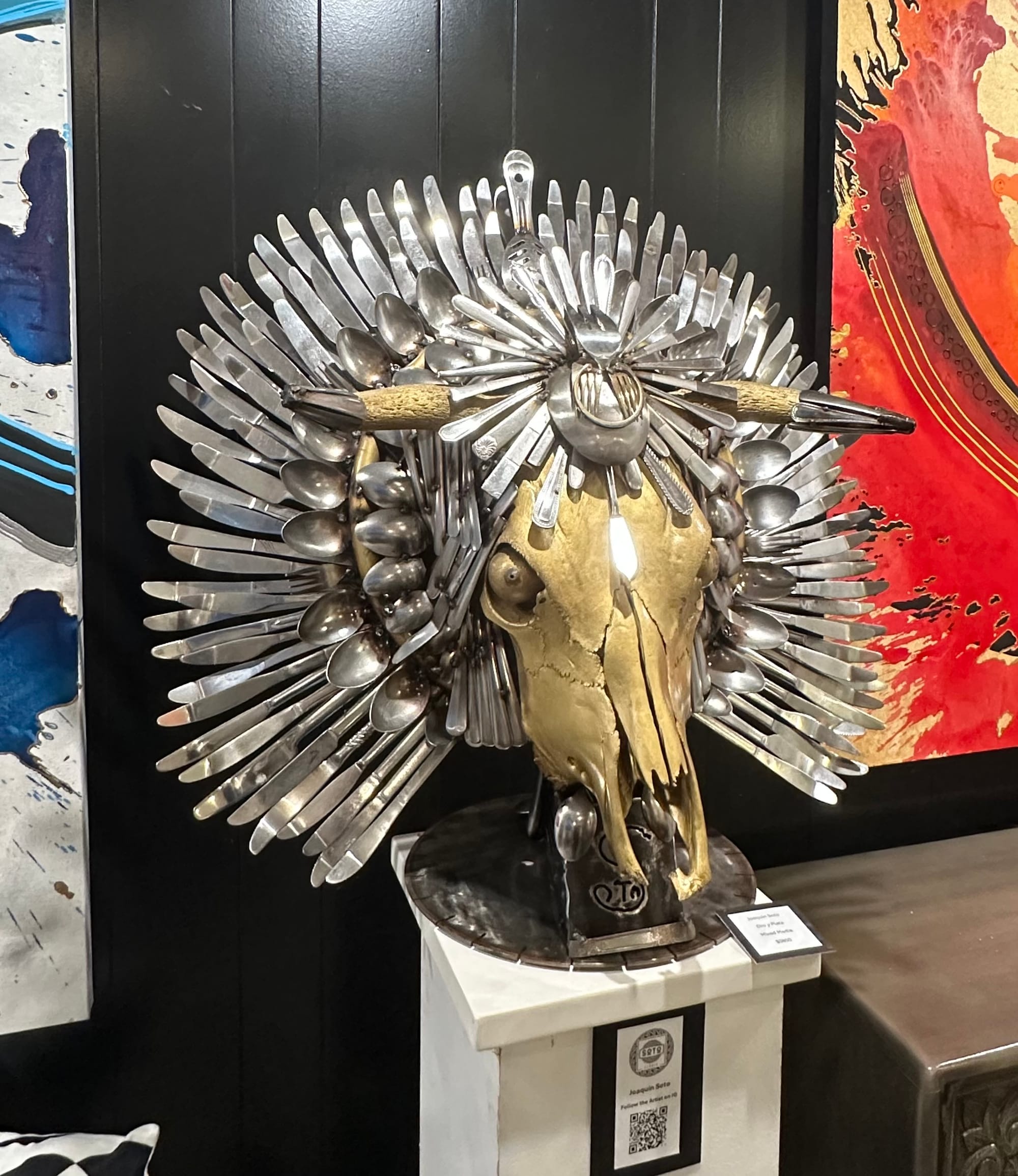
“I see it like a surrealist dream,” he said. “A lot of the stuff that I do, some people look at it, they’re kind of freaked out in a way because the imagery I choose tends to be a little bit darker in a sense, like things being pierced, things being torn apart. “It kind of goes back to my car accident, mimicking the dance of that vehicle or what happened to me and the car”
One new area Soto is exploring is the realm of the Aztec gods from his native Mexico. It’s a ripe pantheon for an artist, full of winged serpents and other impressive deities. Soto recently returned to Mexico to explore temples and places where statues of the gods are for reference.
His deep sense of irony is present in this recent work. Soto’s preferred vehicles to work with in making sculptures are classic Volkswagen Beetles. The iconic cars were built in Mexico from 1967 to 2003 and became something of a national symbol of Mexican manufacturing. A lot of those hardy little cars are still on the road today.
So, Soto takes German cars made in Mexico and shipped all over the Americas, cuts them up, and re-imagines them as the gods of pre-colonial Tenochtitlan. The fact that Soto’s work also has a certain post-apocalyptic vibe is icing on the cake. Fundamentally, he is tearing apart the old world and making it fodder for the new.
It’s art about surviving. Sometimes it’s brutal, but it’s always transformative. Soto sees it as a weld between the pain of the past and the hope of the future.
“I went to Mexico City like six months ago to do the research, and I see all these stone sculptures,” he said. “The fact that my ancestors were sculptors in stone and I’m a sculptor working with metal, it’s ironic in a way that I’m in a way doing something similar that has been done for hundreds of years.”

Comments ()