
What Masako Miki’s Shapeshifters Say About Our World
Rooted in the Shinto animism of Japan, artist Masako Miki uses a fairytale to make comments on the modern world in her Moody Center exhibition
I’ve never wanted to hug a sculpture more, and that’s kind of the point.
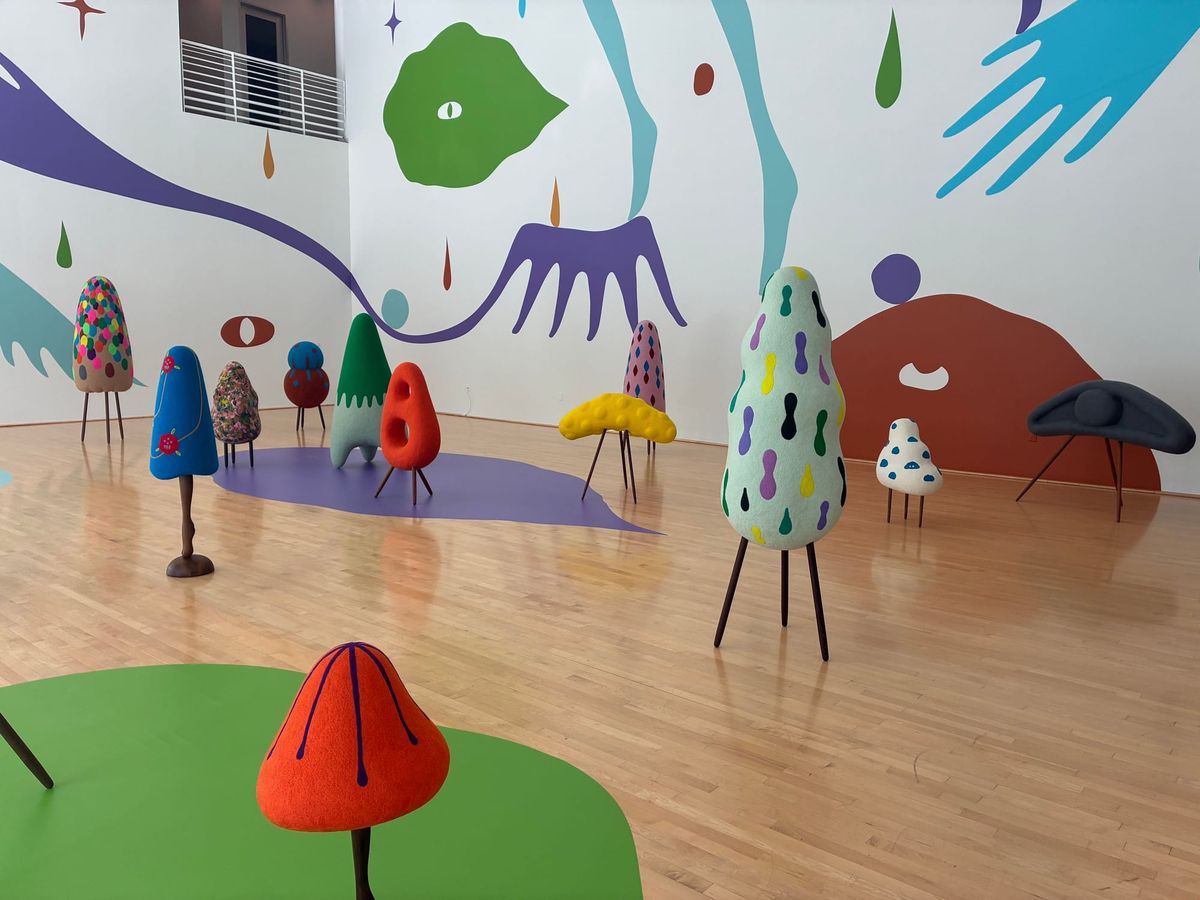
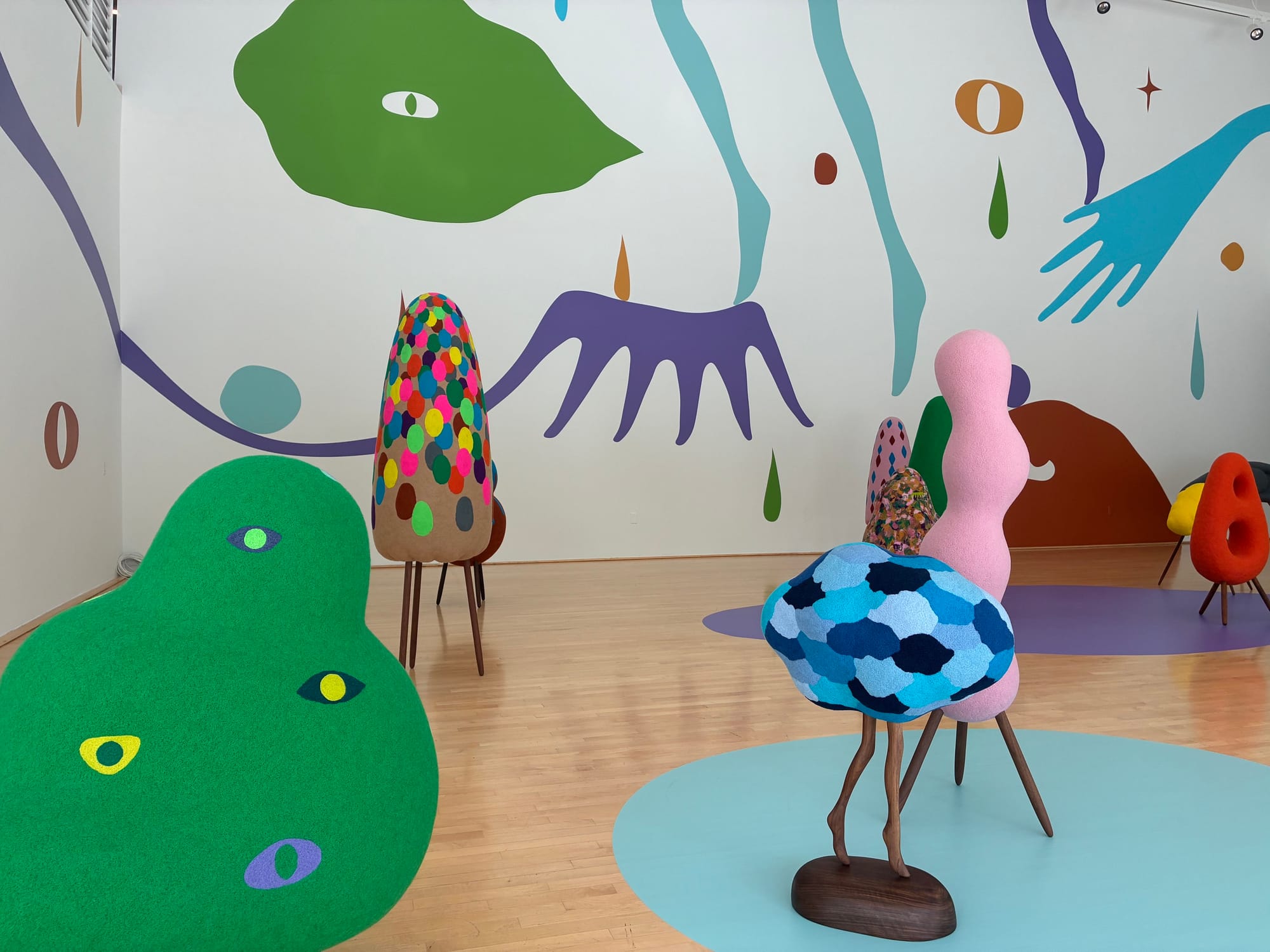
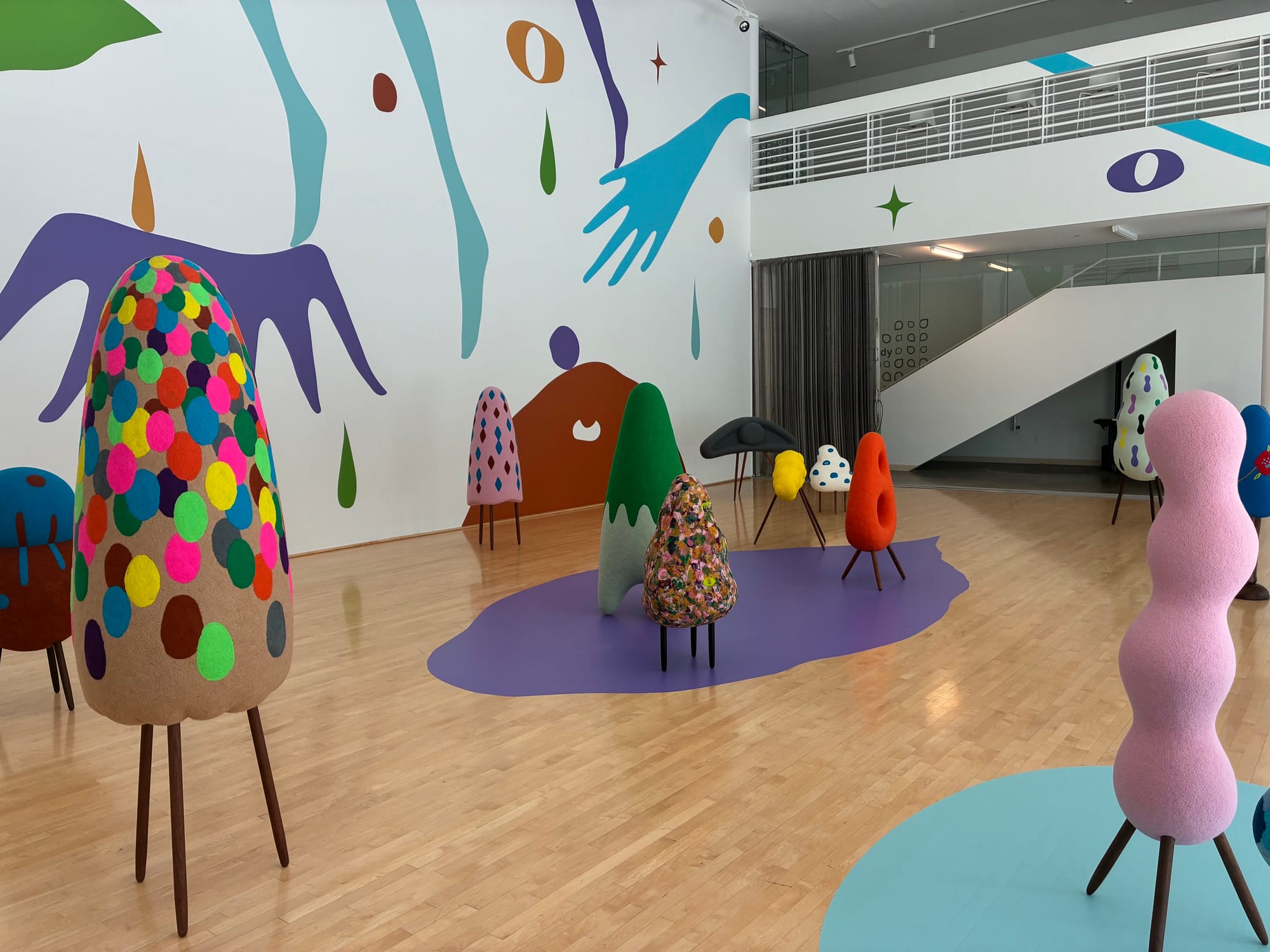
Masako Miki’s exhibition at the Moody Center of the Arts in Houston has transformed the main room into a cross between an enchanted video game forest and a memorial statue garden. Dubbed Shapeshifters, Sprites, and Spirits, Miki’s collection of felt beings is loosely based on the classic Japanese fairytale Night Parade of One Hundred Demons (Hyakki Yagyo). In it, objects that have been discarded by humanity gain sentience and stage a march to protest their abandonment.
Rooted in the Shinto animism of Miki’s native Japan, the San Francisco artist uses the fairytale to make comments on the modern world.
“These are reinvented, reimagined the character by myself, but with this new idea about these are the marginalized populations,” says Miki. “They've been discarded. They’re labeled as no value. And they're basically coming out in a procession, voicing their existence.”
As Pride Month continues and Juneteenth looms in Texas, it’s definitely a moment for reflection on how mainstream society treats people historically deemed expendable. Miki’s felt beings are intentionally inhuman, little more than slightly anthropomorphized clouds, rocks, and trees. They look like children’s art come to life, as if clumsy but earnest finger paintings walked off the page.
Miki explains that this is the point. Her shapeshifters are not human, but the nebulous emotional core of people. Race, class, gender, and other identifiers useful for systemic bigotry melt away, leaving only vulnerable blobs of legs and soft felt impossible to hate.
“No one likes to be left behind,” said Miki. “But it also illustrates the ideas and concepts about Shinto Animism that everything in the universe has a spirituality in it. It really draws this idea about respect and the idea about equity. There's no hierarchy in that animistic tradition.”
Curator Claudia Mattos immediately fixates on one of Miki’s statues as her favorite, an orange figure shaped like the number eight called “Gobo Obake.” It represented as possessed burdock root but could just as easily be a big potato reacting with amused shock.
She has spent months transforming the main gallery of the Moody Center into Miki’s playground. The clouds with eyes have spread down the halls as well as up to the ceiling. There’s a slightly chaotic sense about the whole thing, as if the sculptures really did march in and demand recognition. The last time I saw the main gallery it was hosting photography, leaving the floor open. Now, it feels like a ssit-in staged by Hayao Miyazaki and Dr. Seuss.
For Mattos, the parallel between Miki’s shapeshifters and how Texas treats its own marginalized populations is apparent.
“I think there is a lot of value in that, especially in a place as diverse as Houston. Where we're living among people who are not like us, right?” she said in an interview at the Moody Center. “Our neighbors likely are unlike us in one way or another. And so this exhibition really is about understanding that despite difference, we all share humanity and beingness.”
The crafted empathy extends beyond people. Miki sees the shapeshifters as representing all kinds of misused parts of reality, including the environment. It’s a powerful message in Texas, an oil state that has not always treated the land, flora, and fauna well.
In Shinto, the land has a soul, and Miki’s parade includes the land in its march. Mattos doesn’t consider it anti-progress. It’s more about re-evaluating the way we consider our tools and resources.
“These objects call to what we might consider to be inanimate in everyday life, but these forms also help us to think about, in an interesting way, what we consume,” says Mattos. “If we have our sandals and we took them away, are we discarding something that has an essence in the life in one way or another? And perhaps it's a way also for us to think more consciously about what we own and how we use it and how we value it.”
Unfortunately, visitors are not allowed to hug the shapeshifters (boo). Instead, Moody will hand out samples of materials to touch so that visitors can get the full experience.
However, the emotional desire to respect and comfort Miki’s menagerie of adorable monsters certainly works. If they are the spiritual essence of the world around us, both animate and inanimate, then maybe we should try to save some of the empathy they invoke in our everyday lives.
Shapeshifters, Sprites, and Spirits is on display through August 15. More information can be found here.

Comments ()