
Dakari Butler, Immersive Art, And Anthropomorphic Bowling Pins
The Mundane, Uneventful, & Ordinary Life of Miss Jones, running at Art on Main in Dallas though August 1, is Butler’s most narrative work yet, but also fits into her undefinable oeuvre as an artist
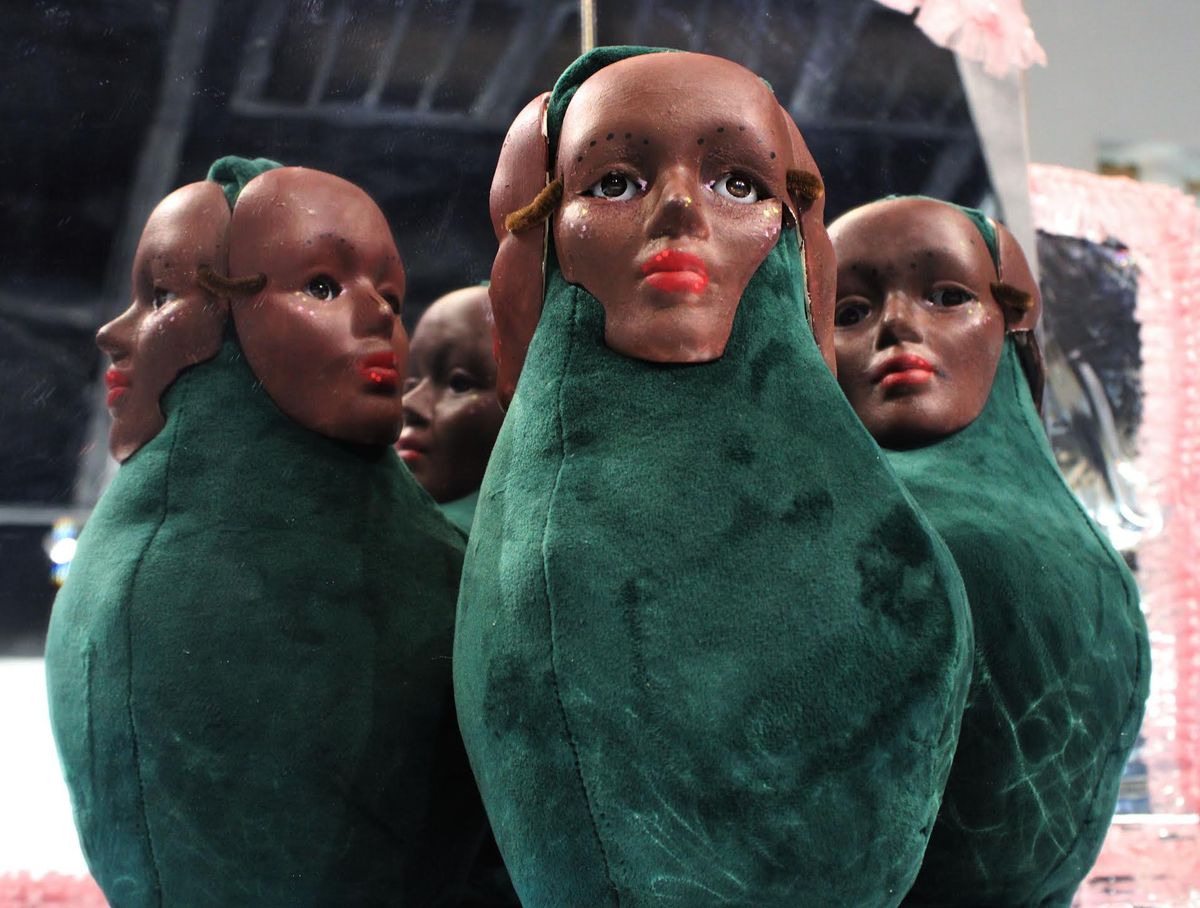
Miss Jones has a simple life. She gets up, puts on her make-up, drives to work, and has spaghetti for dinner. There are two key differences. One, Dallas-based artist Dakari Butler has made it possible to physically delve into every aspect of Miss Jones’s existence like a sort of biographical autopsy.
Two, Miss Jones is a bowling pin with a face.
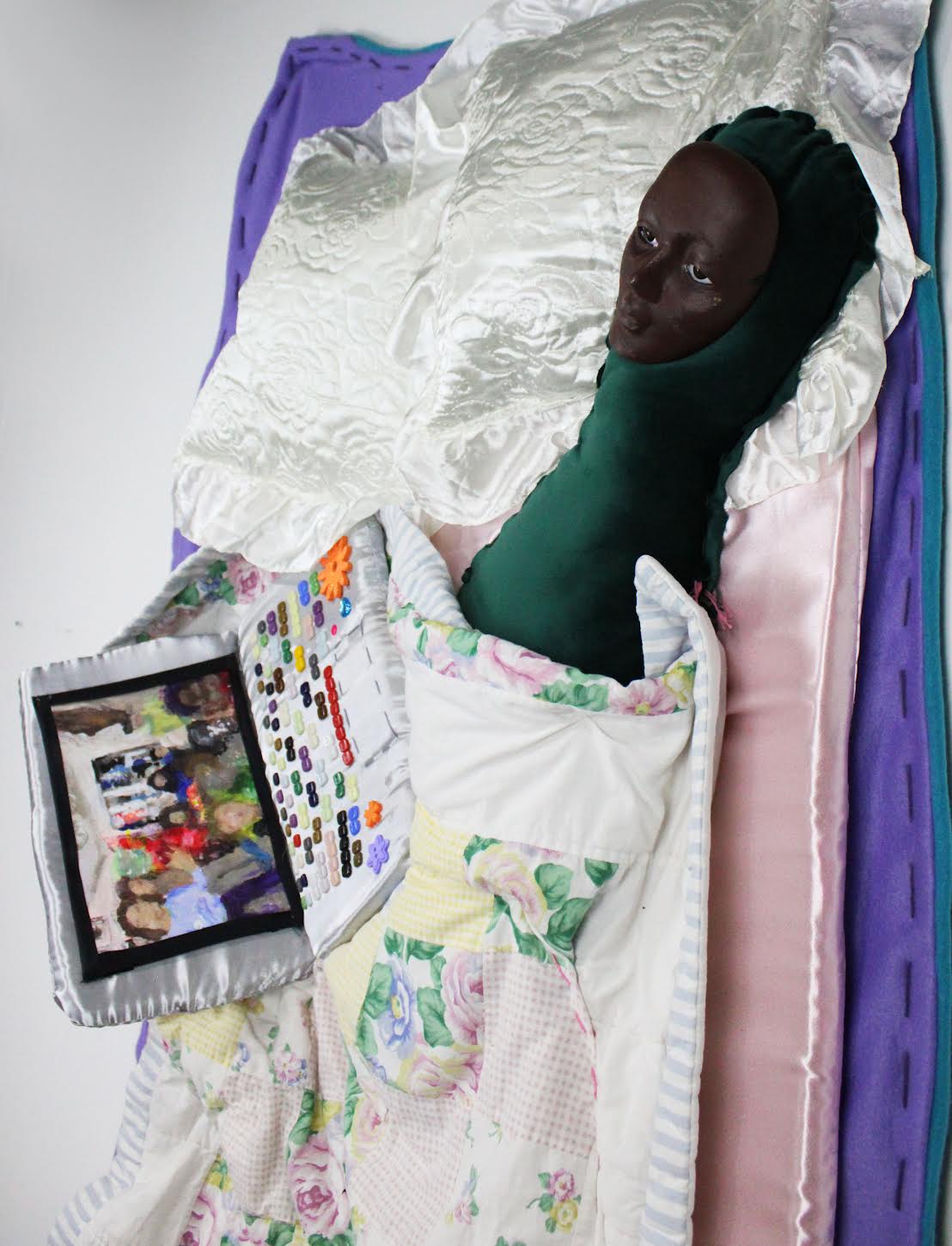
The Mundane, Uneventful, & Ordinary Life of Miss Jones, running at Art on Main in Dallas though August 1, is Butler’s most narrative work yet, but also fits into her undefinable oeuvre as an artist. Unlike most visual creators, Butler expects people to get their hands deep into her work, playing on feel as much as sight. Miss Jones is truly a life in miniature. Butler has created handbags full of documents, readable diaries, clothes visitors can run their hands through, basically everything.
“One of the things I admire most about [Butler] is that she's never afraid to take creative risks,” said Andrea Lamarsaude in an email interview.
“Her work is playful and often humorous on the surface, but beneath that is a thoughtful exploration of how we experience the world and connect with objects and memories. What really sets Dakari apart is that she creates experiences, not just artworks. She works across fiber, sculpture, found objects, sound, and interactive elements in ways that surprise people. There's a strong conceptual foundation behind everything she makes, but she presents it with a sense of humor and accessibility that invites people in rather than intimidating them. You leave her exhibitions smiling, but you're also thinking about them long afterward.”
Quirk is to be expected. Butler grew up in Mesquite playing with art, sewing alongside her mother and doodling with her father, though neither parent was an artist themselves. She was a student at the University of North Texas when COVID hit and spent a fair amount of college learning through Zoom. It was during those touch-starved times that she fell in love with the idea of interactive art, the discipline she’s become a master in at only 25.
“Touch just adds that other element,” said Butler in a phone interview. “One of my favorite parts about making interactive work is seeing smiles on faces. I just like I feel like it opens up a whole new set of emotions that people can feel.”
Butler is lucky to be working in a fabric art renaissance, especially in Texas. Kandy G. Lopez just finished up a brilliant show at the Houston Museum of African American Culture showcasing her yarn portraits, Masako Miki’s felt menagerie invaded the Moody Center, and Alicia Garza and Cielo Zuñiga turned abandoned clothing into a powerful tapestry protesting anti-immigration policies in Brownsville. Part of it is just that more people started working with fabric during the lockdowns.
A bigger part is what fabric represents culturally. Butler sees the medium as something with a long history that’s been ignored in art circles that’s finally getting its place in the sun.
“The first thing I made was a pillowcase. My mom taught me how,” said Butler. “Fiber arts is such a woman-led craft. We're reclaiming fiber work, not just as a craft, but something that can be taken more seriously. I learned from my mom, she learned from her mom, and from her mom, and so on and so forth. I've had conversations with other fiber artists and they definitely connect with that.”
And, of course, it’s something soft you can play with. The genius of Miss Jones is how it lets people explore a life. The fact that Miss Jones is a bowling pin places her as an object somewhere between stylized sculpture and a child’s improvised doll. The exhibition is like stepping inside a Barnie Dreamhouse, with visitors able to connect with Butler’s simple narrative through touch and play.
Interactivity increases empathy and understanding. It’s why museums keep adding elements that can be controlled and neo-Nazis get angry when a video game makes them play as a woman of color. Butler makes interactivity a core part of her artist statement, and that’s why Miss Jones can be both mundane and extraordinary.
Ever since Butler found a bowling pin in an antique shop that someone had added a face to, the idea of Miss Jones has stayed with her. It’s a playful exploration of humanity, and she is sharing that sense of play with everyone.
“Bowling pins stand up and then they're just knocked down,” said Butler. “So, I thought about this bowling pin, like going to a job that's constantly knocked down, put up, knock down, put up, and then driving home. And then what do they do after that? They eat, and then go to bed, just rocks in bed, and then the cycle just starts again. That’s very human.”
Comments ()